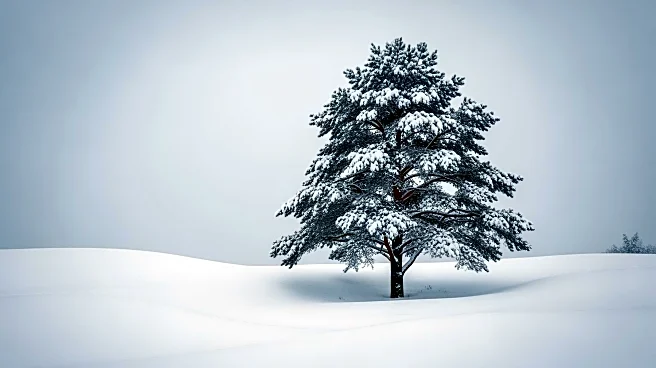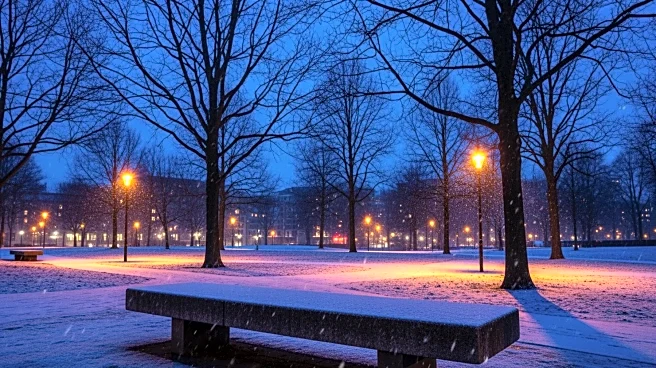




What's Happening?
Winter officially begins on December 21, 2025, marking the winter solstice, which is the shortest day and longest night of the year. This astronomical event occurs when the Northern Hemisphere is tilted farthest from the sun, resulting in minimal daylight
and lower sun angles. The solstice is a significant marker for the start of winter, even if cold weather has already set in. According to the 2025-2026 Old Farmer’s Almanac Winter Forecast, New York is expected to experience varying winter conditions. Central New York and the Southern Tier are predicted to be colder than normal, while Western New York, the Capital Region, Adirondacks, Hudson Valley, and NYC/Long Island may see slightly milder conditions. Snowfall predictions also vary, with Western New York expecting near-normal snowfall, while other regions may see below-normal snow levels.
Why It's Important?
The winter solstice is a critical time for understanding seasonal weather patterns and preparing for the months ahead. For New York, the forecasted conditions could impact various sectors, including agriculture, transportation, and energy consumption. Colder-than-normal temperatures in certain areas may increase heating demands, affecting energy prices and consumption. Meanwhile, milder conditions in other regions could benefit transportation and reduce the risk of weather-related disruptions. The varying snowfall predictions also have implications for local economies, particularly in areas reliant on winter tourism and recreation.
What's Next?
As the solstice approaches, residents and businesses in New York will need to prepare for the predicted weather conditions. This includes ensuring adequate heating supplies, preparing for potential transportation disruptions, and planning for snow removal and other winter-related services. Meteorologists and local authorities will continue to monitor weather patterns and provide updates to help communities adapt to the changing conditions. Additionally, the accuracy of the Old Farmer’s Almanac predictions will be closely watched, as it claims an 80% accuracy rate based on solar science, climatology, and meteorology.