
What's Happening?
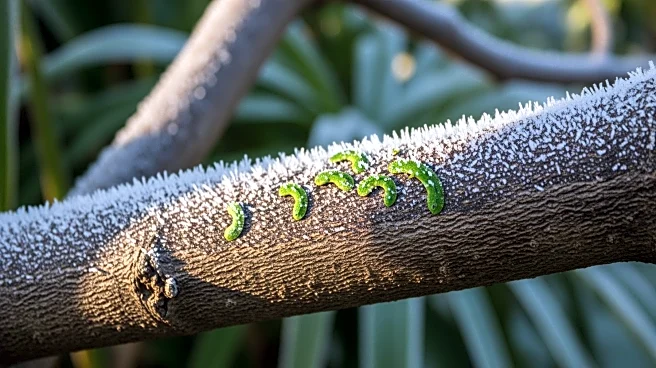
Florida is currently experiencing a significant cold snap, with temperatures dropping to record lows, such as -4°C in Orlando, the coldest February temperature recorded since at least 1923. This unusual
weather has led to a peculiar phenomenon where iguanas, which are cold-blooded reptiles, become immobilized and fall from trees. The Miami-based WPLG 10 TV network described the situation as 'raining iguanas.' In response, the Florida Fish and Wildlife Conservation Commission (FWC) has issued an executive order allowing residents to transport these iguanas to designated collection sites. These sites will either humanely euthanize the iguanas or transfer them to licensed permit holders for sale outside the state. This measure aims to manage the iguana population, which is considered invasive in Florida.
Why It's Important?
The cold snap and the resulting iguana falls highlight the impact of unusual weather patterns on local wildlife and ecosystems. Iguanas are not native to Florida and are considered an invasive species, often causing damage to local flora and infrastructure. The state's decision to allow the collection and humane euthanization of these reptiles is a strategic move to control their population and mitigate potential ecological damage. This event underscores the broader challenges of managing invasive species and the effects of climate variability on wildlife. It also raises awareness about the need for adaptive wildlife management strategies in response to changing environmental conditions.
What's Next?
As temperatures are expected to rise again, the immediate threat to the iguanas will diminish, but the state will continue to monitor the situation closely. The FWC's executive order is a temporary measure, and its effectiveness in controlling the iguana population will likely be evaluated. Future actions may include more permanent solutions for managing invasive species in Florida. Additionally, this event may prompt discussions on how to better prepare for and respond to similar occurrences in the future, potentially influencing wildlife management policies and practices.