




What's Happening?
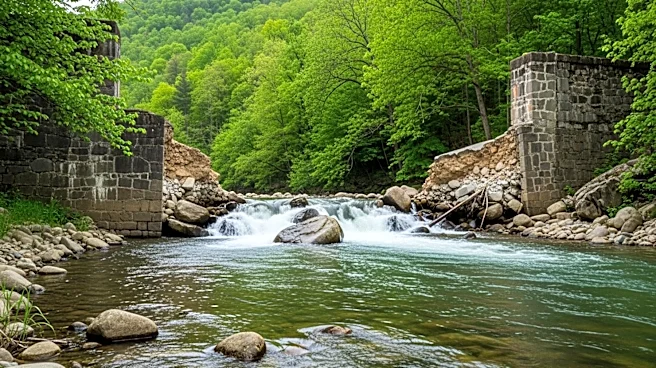
Countries across Europe are actively removing dams and barriers to restore natural river ecosystems and improve fish migration routes. In 2025, a record 603 barriers were dismantled, reconnecting thousands of kilometers of rivers. This initiative is part
of a broader effort to address climate-related water risks and restore biodiversity. The removal of dams, such as those on Finland's Hiitolanjoki River, has led to rapid ecological recovery, with salmon returning to previously inaccessible areas. The EU's Nature Restoration Regulation supports these efforts by setting targets for restoring free-flowing rivers.
Why It's Important?
The removal of dams is crucial for restoring river ecosystems, which play a vital role in maintaining biodiversity and mitigating climate change impacts. By reconnecting rivers, countries can enhance their resilience to floods and droughts, reduce greenhouse gas emissions from reservoirs, and support the recovery of endangered species. This initiative reflects a growing recognition of the need to balance human infrastructure with environmental sustainability, offering a model for other regions facing similar challenges.
What's Next?
As dam removal projects continue, countries will need to manage the environmental and social impacts of these efforts. This includes ensuring the stability of riverbanks, managing sediment flow, and engaging with local communities. The success of these projects could inspire similar initiatives globally, particularly in regions with aging water infrastructure. Ongoing monitoring and adaptive management will be essential to maximize the ecological benefits of restored river systems.