

What's Happening?
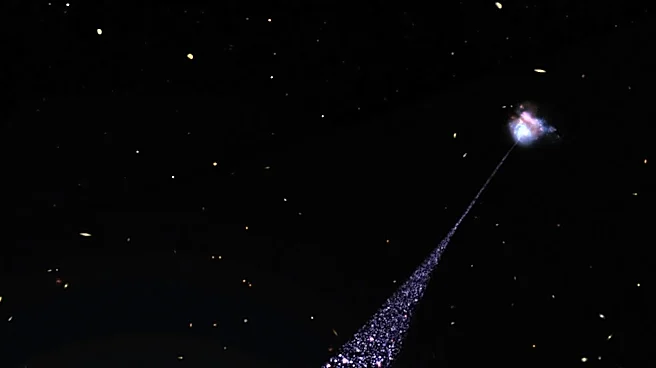
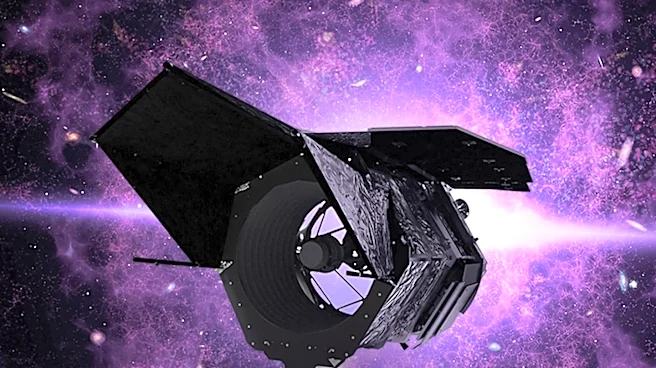
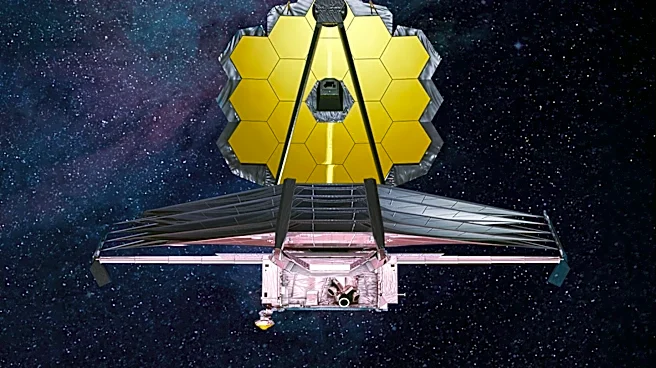
The James Webb Space Telescope (JWST) has provided new insights into the mysterious 'little red dots' found in the early universe. These objects, discovered shortly after JWST became operational, appear small, red, and bright, suggesting they existed
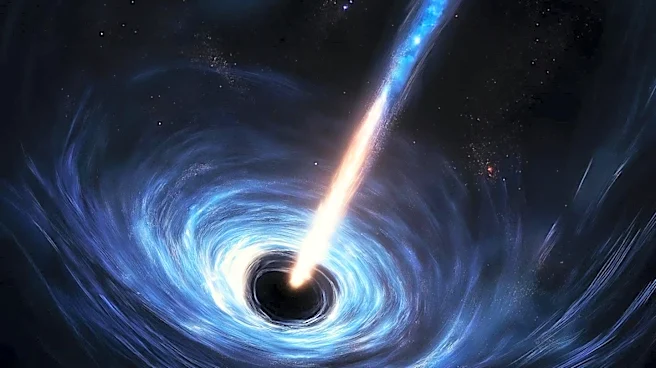
between 13.2 and 12.2 billion years ago. Researchers hypothesize that these dots are 'black hole stars,' vast clouds of gas heated by growing supermassive black holes. Recent studies suggest that these dots may evolve into active centers of galaxies, with a distant galaxy named Saguaro identified as a potential descendent. This discovery helps scientists understand the development of galaxies with supermassive black holes.
Why It's Important?
Understanding the evolution of 'little red dots' is crucial for comprehending the formation and development of galaxies in the universe. These findings provide a link between early cosmic structures and modern galaxies, offering insights into the processes that shape the universe. The research could redefine our understanding of galaxy formation and the role of supermassive black holes. As scientists continue to study these phenomena, they may uncover new information about the universe's history and the mechanisms driving cosmic evolution.