



What's Happening?
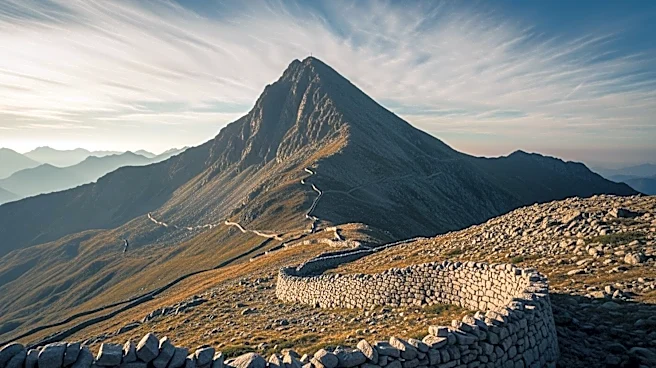
Federal officials have initiated an eminent domain claim to acquire Mount Cristo Rey, a mountain on the Texas-Mexico-New Mexico border, from the Catholic Church. The government aims to use the land for President Trump's border wall, citing the need to prevent
unauthorized immigration. The mountain, topped with a statue of Jesus, is a significant religious site, drawing pilgrims from both sides of the border. The Catholic Diocese of Las Cruces opposes the acquisition, arguing it would violate religious rights and disrupt pilgrimage routes. The U.S. Customs and Border Protection (CBP) has stated that they attempted to purchase the land but resorted to eminent domain when the church refused to sell. The proposed 'Smart Wall' would include steel bollards and remote-detection technology. The diocese has filed a court case to block the acquisition, emphasizing the site's cultural and religious importance.
Why It's Important?
The dispute over Mount Cristo Rey highlights the ongoing tension between federal infrastructure projects and religious freedoms. The case underscores the broader debate over the border wall's impact on communities and cultural sites. The Catholic Church's resistance reflects concerns about the preservation of religious and cultural heritage, while the government's stance emphasizes national security priorities. The outcome of this case could set a precedent for how similar conflicts are resolved in the future, potentially affecting other religious or culturally significant sites along the border. The situation also illustrates the broader implications of eminent domain in balancing public interest with individual and community rights.
What's Next?
The legal battle over Mount Cristo Rey is expected to continue as the Catholic Diocese seeks to block the government's acquisition. The case will likely draw attention from civil rights and religious organizations, potentially leading to broader public discourse on the issue. If the court sides with the government, construction of the border wall could proceed, altering the landscape and accessibility of the site. Conversely, a ruling in favor of the diocese could reinforce protections for religious sites against federal projects. The decision may influence future policy on eminent domain and its application to culturally sensitive areas.