





What's Happening?
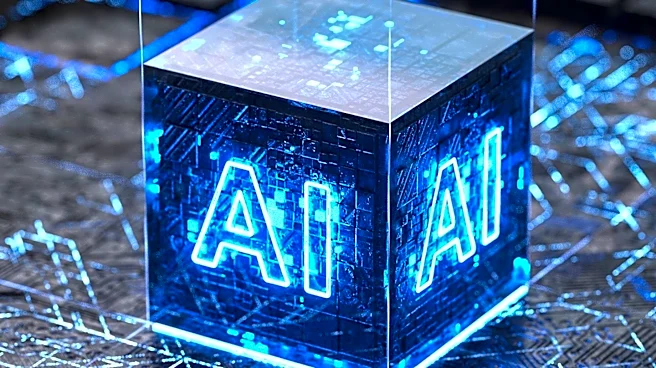
Rep. Riley Moore, a Republican from West Virginia and former welder, is promoting artificial intelligence (AI) as a technology that can significantly benefit blue-collar workers by increasing productivity and safety, rather than replacing jobs. Moore has
engaged with labor organizations, including the Teamsters, to discuss his perspective on AI's role in the workplace. He views AI as a potential 'nuclear bomb for work,' capable of bringing substantial positive advancements, particularly in manufacturing. His advocacy comes as Congress and businesses are actively debating the implications of AI on employment, economic growth, and national security. Moore emphasizes that AI should act as a 'force-multiplier' for workers, extending their career longevity, making jobs safer, and improving efficiencies, which could lead to better-paying positions. He also highlights the importance of U.S. leadership in AI to counter China's growing influence in the global AI landscape.
Why It's Important?
Rep. Moore's stance is significant because it offers a counter-narrative to the widespread concern that AI will lead to mass job displacement, particularly in blue-collar sectors. By advocating for AI as a tool for enhancement rather than replacement, he aims to reshape the public and political discourse around technological advancement in the workplace. This perspective could influence policy decisions regarding AI integration, training programs, and labor protections, potentially fostering an environment where AI is adopted in a manner that supports the existing workforce. Furthermore, his emphasis on U.S. leadership in AI is crucial for national security and economic competitiveness, especially in the context of a global 'AI arms race' with countries like China. Successful integration of AI, as proposed by Moore, could lead to increased wages, improved working conditions, and a stronger U.S. economy, benefiting a broad spectrum of American workers and industries.
What's Next?
The ongoing discussions between lawmakers, businesses, and labor stakeholders, including the Teamsters, are expected to continue shaping the future of AI policy and its integration into the U.S. workforce. Rep. Moore's advocacy will likely contribute to legislative efforts aimed at harnessing AI's benefits while mitigating potential risks. Debates surrounding data centers, which power AI technology, are also anticipated to intensify, particularly concerning their energy consumption, water usage, and community impact. Local communities and policymakers will need to address how to balance the economic advantages of data centers with environmental and social concerns. Future policy decisions may focus on creating frameworks that encourage AI development and adoption in a way that prioritizes worker well-being and maintains U.S. technological leadership, potentially through incentives for companies that use AI to augment human labor rather than replace it.
Beyond the Headlines
Rep. Moore's perspective delves into the deeper societal implications of AI, particularly the 'dignity of work' and human purpose. His concern that AI could 'eliminate jobs as we know it' and diminish human purpose highlights a fundamental ethical challenge posed by advanced technology. This extends beyond mere economic impact to questions of societal structure and individual fulfillment. The debate over AI's role in blue-collar work also touches upon the broader philosophical discussion about the relationship between humans and technology, echoing historical concerns about industrial automation. By framing AI as a potential 'nuclear bomb for work,' Moore underscores the transformative, and potentially disruptive, power of this technology, urging a thoughtful and human-centric approach to its development and deployment. This includes considering how AI can be used to extend human capabilities and improve quality of life, rather than solely focusing on efficiency gains.