
What's Happening?
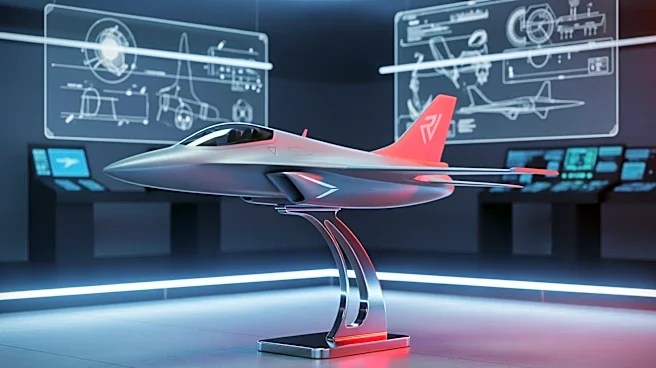
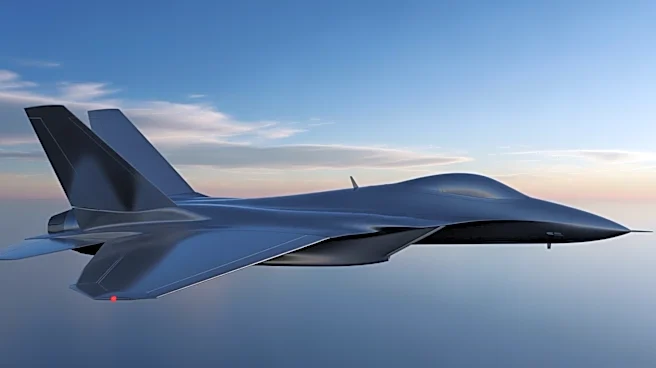
Boeing is developing the F-47 Next-Generation Air Dominance fighter, designed to operate in the Indo-Pacific theater with a combat radius exceeding 1,000 nautical miles, nearly double that of the Lockheed
Martin F-22. This development is part of the U.S. Air Force's strategy to evolve Collaborative Combat Aircraft (CCA) to support crewed aircraft and build mass to counter peer adversaries. The F-47's extended range is expected to influence the design of autonomous platforms, such as the Agile Sword, which would be air-launched from F-47s and Boeing C-17 airlifters. The Agile Sword concept includes two versions: the recoverable XQ-77A for testing and training, and the expendable XQ-77B for operational use, which would carry a warhead and function as a cruise missile after expending its air-to-air weapons.
Why It's Important?
The development of the F-47 and its associated CCA platforms is significant for U.S. military strategy in the Indo-Pacific region, where distance and logistics pose challenges. By extending the range and capabilities of its aircraft, the U.S. Air Force aims to enhance its operational flexibility and effectiveness against potential threats. The integration of autonomous systems like the Agile Sword could provide a cost-effective solution to increase the force's reach and lethality. This approach aligns with broader defense goals to maintain air superiority and deter aggression in a strategically vital area, impacting defense contractors, military planners, and geopolitical dynamics.
What's Next?
As Boeing and the U.S. Air Force continue to develop the F-47 and its associated systems, further testing and evaluation of the Agile Sword concept are expected. The focus will likely be on refining the design to ensure compatibility with the F-47's extended range and operational requirements. Additionally, the Air Force may explore deployment strategies for these systems, including prepositioning ground-launched CCAs at strategic locations. The outcomes of these developments could influence future procurement decisions and defense policies, with potential implications for international military collaborations and regional security arrangements.