





What's Happening?
A comprehensive systematic review, synthesizing 25 years of research, reveals that global food insecurity is not solely an issue of agricultural production but is driven by complex interactions among climate change, water scarcity, and political conflict.
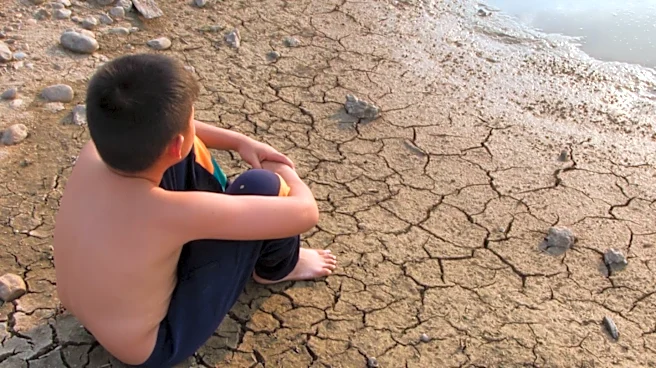
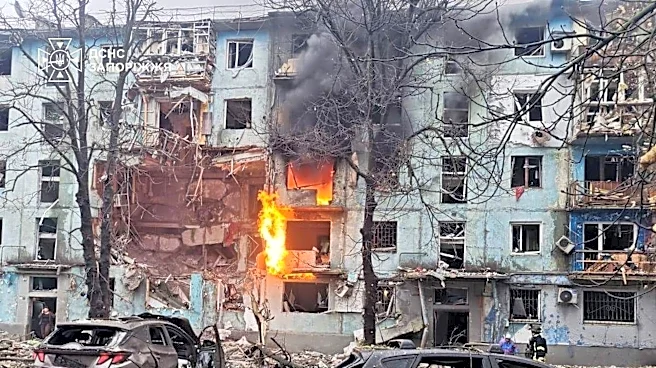
The study, based on 70 peer-reviewed investigations, highlights how environmental degradation, hydrological deficits, and geopolitical instability converge with socioeconomic inequalities to destabilize food systems worldwide. Climate change is identified as a primary systemic threat, leading to reduced crop yields and production instability due to rising temperatures, altered precipitation, droughts, and floods. Water scarcity acts as a critical physical constraint on crop and livestock production, exacerbated by groundwater overextraction, inefficient irrigation, and agricultural pollution. The review also emphasizes that violent conflict devastates agricultural infrastructure, displaces farming populations, and can lead to the deliberate weaponization of hunger, as seen in the Russia-Ukraine conflict's impact on global food supply chains and prices.
Why It's Important?
This research is crucial for understanding the multifaceted nature of food insecurity, moving beyond a singular focus on agricultural output. For the U.S. and global stakeholders, it underscores the need for integrated policy responses that address the interconnectedness of environmental, social, and political factors. The findings suggest that isolated interventions are likely to fail, as disruptions in one sector cascade across others, transforming localized pressures into persistent regional food crises. The concept of 'virtual water' in global trade, while allowing water-scarce nations to conserve domestic aquifers, also introduces systemic vulnerabilities to international price spikes and geopolitical disruptions, impacting U.S. agricultural trade and food aid strategies. The study's emphasis on socioeconomic deprivation and shifting demographic demands, such as increased meat consumption, highlights the strain on global resources and the need for sustainable food systems that consider both production and equitable access.
What's Next?
The authors advocate for an integrated, resilience-oriented governance framework that transcends isolated agricultural production goals. This framework would involve coupling climate-resilient farming techniques and sustainable watershed governance with robust local storage facilities, diversified distribution networks, and community empowerment. Early-warning systems linked to responsive financing and administrative capacity are crucial for timely crisis intervention. Governments are urged to coordinate agricultural, water, trade, and social protection policies to eliminate institutional fragmentation and prevent unintended policy spillovers. The review also points to significant research gaps concerning food loss and waste, food sovereignty, and marginalized populations, suggesting future research should adopt participatory methodologies to evaluate resource efficiency and inclusive decision-making in vulnerable environments.
Beyond the Headlines
The review's findings have profound ethical and long-term implications. The disproportionate impact of climate-driven disruptions on tropical regions and impoverished populations raises questions of global equity and responsibility. The weaponization of hunger during conflicts highlights a severe ethical breach and a challenge to international humanitarian law. The emphasis on 'virtual water' and its potential vulnerabilities suggests a need for a re-evaluation of global trade policies to ensure food security is not compromised by over-reliance on external imports. Furthermore, the call for integrating food sovereignty frameworks into mainstream research points to a shift towards empowering local communities and smallholder farmers, potentially leading to more resilient and equitable food systems that challenge the dominance of large corporate agribusinesses and address the root causes of food poverty and malnutrition.