






What's Happening?
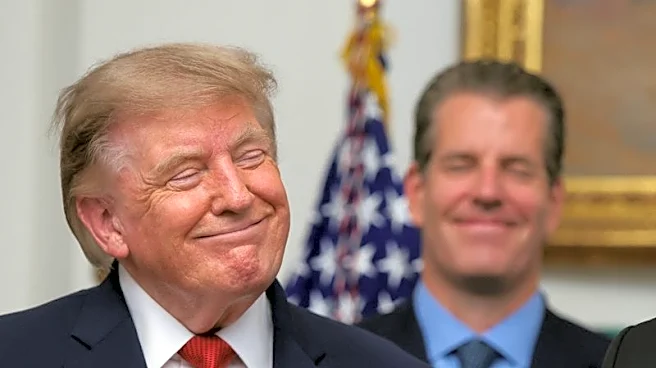
The Trump administration is moving forward with executive actions to regulate the cryptocurrency industry, even as comprehensive legislation, specifically the Clarity Act, remains stalled in the Senate. President Trump met with crypto executives, including
the CEOs of Coinbase and Robinhood, urging Congress to resolve disagreements over ethics provisions within the Clarity Act that aim to prevent government officials from profiting from digital assets. Simultaneously, the Office of the Comptroller of the Currency (OCC) is accelerating its regulatory timeline. Acting Comptroller Jonathan Gould announced plans to finalize federal rules for stablecoins by November and begin processing crypto license applications in January. This regulatory push follows the GENIUS Act, passed in July 2025, which established the first federal framework for stablecoins, digital tokens pegged to the U.S. dollar and backed by high-quality liquid assets.
Why It's Important?
This development is significant for the U.S. financial sector and the burgeoning cryptocurrency industry. The Trump administration's proactive stance, particularly through the OCC's accelerated timeline for stablecoin regulations and crypto license applications, signals a move towards greater regulatory clarity and mainstream integration of digital assets. This could provide a more stable and predictable environment for businesses operating in the crypto space, potentially attracting more institutional investment and fostering innovation. For banks, the proposed OCC rules, which aim to prevent stablecoin companies from exploiting loopholes to pay interest to users, could be beneficial. The increased number of bank charter applications involving digital asset activity, an eightfold increase from the prior administration, underscores the growing interest and potential for growth in this sector. However, the continued deadlock in Congress over the Clarity Act highlights ongoing political challenges in establishing a unified legislative framework for cryptocurrencies.
What's Next?
The OCC is set to finalize federal rules for stablecoins by November 2026 and will begin processing crypto license applications starting in January 2027. This will provide a clearer regulatory pathway for stablecoin issuers and other crypto businesses seeking federal charters. The Trump administration will likely continue to push for congressional action on the Clarity Act, urging lawmakers to overcome the current impasse regarding ethics provisions. Industry executives are expected to engage further with regulators to help shape the evolving regulatory landscape. The outcome of these regulatory efforts and the potential passage of the Clarity Act will significantly influence the future growth and stability of the cryptocurrency market in the United States, impacting investors, businesses, and consumers alike.
Beyond the Headlines
The administration's push for crypto regulation, particularly concerning stablecoins, reflects a broader effort to integrate digital assets into the traditional financial system while mitigating potential risks. The focus on preventing government officials from profiting from digital assets, as highlighted in the stalled Clarity Act, underscores ethical considerations surrounding public service and emerging financial technologies. The rapid increase in bank charter applications involving digital assets suggests a fundamental shift in how financial institutions perceive and engage with cryptocurrencies, moving them from a niche interest to a core component of future business models. This regulatory evolution could set a precedent for other nations, influencing global standards for digital asset governance and potentially reshaping the future of finance.