



What's Happening?
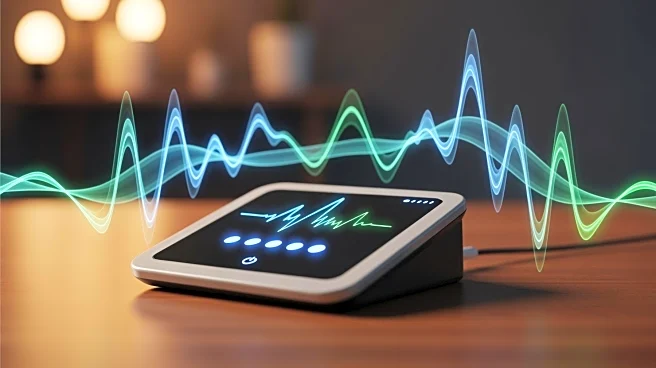
Reflect Innovation, an Israeli startup, has developed a biofeedback device called the Reflect Orb, designed to help users manage stress by providing real-time feedback on their physiological state. The device, which is paired with a mobile app, has gained
traction in both Israel and the U.S., particularly following the October 7 attacks. It is used by clinicians and therapists to aid trauma survivors, including those affected by the attacks. The Reflect Orb collects data from the user's fingertips and translates it into visual feedback, helping users learn to self-regulate their stress responses. The device has been integrated into therapy sessions and is being used to support individuals with anxiety, ADHD, and trauma-related symptoms.
Why It's Important?
The Reflect Orb represents a significant advancement in accessible mental health tools, offering a tangible solution for stress management and trauma recovery. Its use in clinical and therapeutic settings highlights the growing demand for innovative mental health technologies. By providing real-time feedback, the device empowers users to become more aware of their internal states and improve their stress management skills. This is particularly important in the context of trauma, where traditional therapeutic approaches may not be sufficient. The device's success in Israel, a country with a high prevalence of trauma-related conditions, underscores its potential impact on global mental health practices.
What's Next?
Reflect Innovation plans to expand the use of the Reflect Orb in various settings, including schools, clinics, and workplaces. The company is also exploring personalized protocols for different conditions, such as anxiety and trauma. As demand for the device grows, Reflect is conducting studies to further validate its effectiveness in trauma therapy. Collaborations with healthcare institutions and government bodies are expected to enhance the device's reach and impact. The company aims to continue adapting the device to meet the needs of diverse populations, ensuring it remains a valuable tool in mental health care.