


What's Happening?
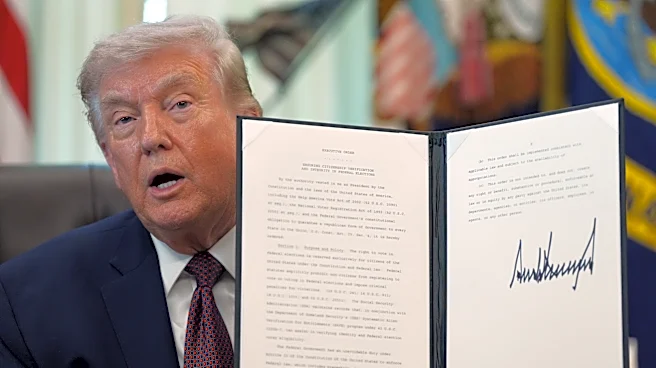
The White House, under President Trump, has issued an executive order that seeks to limit mail-in voting and mandate the creation of federal voter lists. The order instructs federal agencies to compile lists of American voters, including their citizenship
status, and transmit these to states. It also directs the USPS to implement new regulations for mail-in ballots, including the use of barcodes for tracking. The order claims the authority to withhold federal funding from states that do not comply. Critics argue that the order is unconstitutional and likely to be challenged in court, as it may infringe on states' rights to manage elections.
Why It's Important?
This executive order could significantly alter the administration of elections in the U.S., particularly regarding mail-in voting, which has become increasingly popular. By asserting federal control over voter lists and mail-in ballot procedures, the order challenges the traditional state-led management of elections. Legal experts and state officials have expressed concerns about the order's constitutionality, suggesting it may face swift legal challenges. The order's focus on preventing voter fraud, despite evidence of its rarity, underscores ongoing political debates about election security and integrity.
What's Next?
The executive order is expected to face immediate legal challenges from states and civil rights organizations. These challenges will likely focus on the order's constitutionality and its potential infringement on states' rights. The outcome of these legal battles could have significant implications for the balance of power between federal and state governments in election administration. Additionally, the order's impact on mail-in voting could affect voter participation and election logistics, particularly in states that rely heavily on absentee ballots.