



What's Happening?
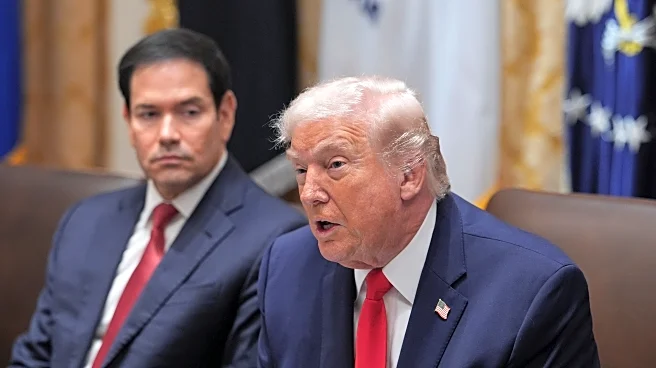
Bill Steiger, a key figure in shaping U.S. global health policy, has praised the Trump administration's approach to foreign assistance, emphasizing sustainability and self-reliance. Steiger, who has recently become CEO of Malaria No More, highlighted
the administration's focus on transitioning aid programs to be more sustainable and efficient. This approach aims to empower national institutions to manage health programs independently. Steiger's new role at Malaria No More aligns with his belief in the transformative potential of new technologies to combat malaria, a disease responsible for significant mortality worldwide. The organization is advocating for innovative solutions like gene drive technology and new diagnostic tools to enhance malaria control efforts.
Why It's Important?
The Trump administration's shift towards a more sustainable model of foreign aid could have significant implications for global health security and economic opportunities for American businesses. By focusing on self-reliance, the U.S. aims to create more efficient aid programs that align with national interests while continuing to save lives. This strategy could potentially reduce dependency on U.S. aid and foster local leadership in health management. The emphasis on innovative technologies in malaria control could lead to breakthroughs in disease prevention, benefiting both global health and economic growth.
What's Next?
As Steiger takes on his new role, Malaria No More will likely continue to push for the adoption of cutting-edge technologies in malaria prevention. The organization's advocacy efforts will focus on educating policymakers and the public about the potential of these innovations. The U.S. government's commitment to this strategy will be tested as it balances national interests with global health responsibilities. The success of this approach could influence future U.S. foreign aid policies and set a precedent for other nations.