





What's Happening?
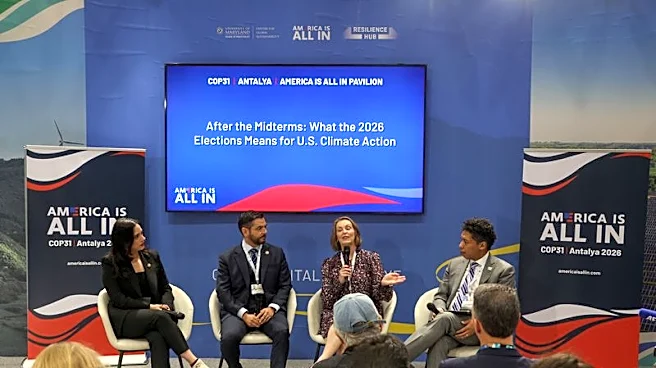
The COP31 climate summit in Turkey is discussing a global electrification pledge, aiming to increase electricity's share of global final energy consumption from approximately 23% to 35% by 2035. While electric vehicles (EVs) have been a primary focus
of the green transition, electric cooking is emerging as another significant driver for electrification. Experts at COP31, including Alicia Butterfield, global manager of the Global Electric Cooking Coalition, are advocating for electric cooking to be a major component of the global energy transition. This initiative seeks to replace traditional, polluting stoves with clean, electric cooking appliances. Tanzania's national clean cooking strategy, supported by the UK-funded eCooking Scale and Support programme, aims for 80% of its population to use clean cooking solutions by 2034, demonstrating innovative financial approaches like utility on-bill financing and credit lines for appliance suppliers.
Why It's Important?
The emphasis on electric cooking at COP31 signifies a broader understanding of electrification's potential impact beyond transportation. Unlike EVs, which not everyone uses, cooking is a universal and essential energy service, making its electrification potentially more far-reaching. Increased electricity consumption from electric cooking can generate additional revenue for national utilities, improving the commercial viability of investments in generation and distribution networks. For decentralized electricity providers, reliable demand from cooking can enhance return on investment and make off-grid rural electrification projects more financially viable. This transition also offers significant environmental and public health benefits by reducing harmful pollution from methane and black carbon, which are linked to respiratory problems and climate change.
What's Next?
The 35-by-35 global electrification pledge at COP31 is currently under discussion, and its final form as a commitment remains uncertain. However, the ongoing advocacy for electric cooking suggests it will likely gain more prominence in national energy planning and international investment conversations. Future steps will involve developing more electricity generation, particularly from renewables, strengthening grids, and improving energy storage. The success of programs like Tanzania's, which includes new repair and maintenance training and appliance standards, could serve as a model for other nations. Policymakers are encouraged to look beyond the most visible technologies to integrate electric cooking into global electrification agendas, potentially leading to coordinated policy, investment, and innovation tailored to local circumstances.
Beyond the Headlines
The shift towards electric cooking has deeper implications for energy security and economic development, especially in regions undergoing rapid electrification like Africa. By reducing dependence on imported fossil fuels, countries can enhance their energy security and mitigate the impact of volatile international energy markets. The economic benefits extend to households, where the cost of daily cooking can decrease with efficient electric appliances. Furthermore, reducing the time and effort associated with collecting traditional biomass fuels can free up time for income-generating activities, particularly for women and children. This transition also highlights the importance of innovative financial mechanisms and the integration of electricity generation and demand-side activities to create a sustainable and equitable energy future.