









What's Happening?
A recent Prudential survey highlights a significant paradox among U.S. retirees: a majority, specifically 54%, would prefer to leave their accumulated wealth to heirs rather than risk depleting it for personal enjoyment. This sentiment is prevalent even
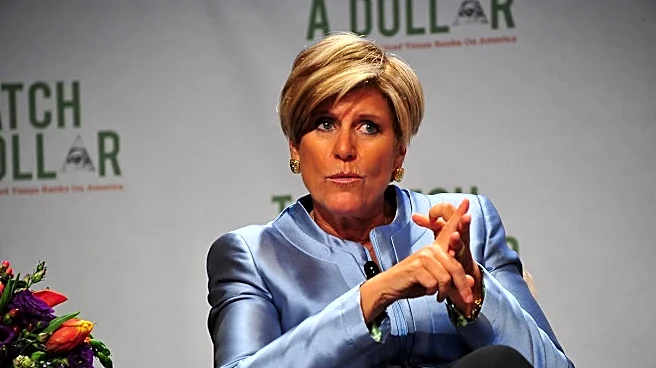
among those with substantial savings; 61% of retirees possessing at least $500,000 in investments express discomfort in spending on leisure and enjoyment. Financial author and AARP columnist Jean Chatzky attributes this 'retirement spending dilemma' to the shift from traditional pensions to self-managed 401(k)s and IRAs. Retirees, after decades of diligently building their nest eggs, find it psychologically challenging to draw down their savings, viewing each withdrawal as a loss. The complexity of converting a lump sum into a reliable income stream, navigating tax implications, required minimum distributions, market timing, and healthcare costs, further exacerbates this anxiety. The survey underscores a fundamental gap between financial preparation and the actual enjoyment of retirement.
Why It's Important?
This reluctance to spend among U.S. retirees has significant implications for the national economy and individual well-being. On a societal level, a large segment of the retired population hoarding wealth rather than spending it can lead to reduced consumer demand, potentially slowing economic growth. For individuals, this behavior means that despite years of hard work and saving, many retirees are not experiencing the financial freedom and enjoyment they anticipated. The shift from predictable pension checks to self-managed retirement accounts places a greater burden on individuals to make complex financial decisions, often without adequate guidance or psychological preparedness. This situation can lead to increased stress and anxiety in retirement, undermining the very purpose of saving. Furthermore, it highlights a potential mismatch between financial planning strategies, which often focus on accumulation, and the realities of 'decumulation'—the intelligent spending of savings in retirement. Addressing this dilemma could involve new financial products, educational initiatives, and policy considerations aimed at encouraging responsible spending and ensuring retirees can enjoy their golden years.
What's Next?
Addressing the retirement spending dilemma will likely involve a multi-faceted approach from financial institutions, policymakers, and financial educators. Financial advisors may need to adapt their strategies to not only focus on wealth accumulation but also on 'decumulation' strategies that provide retirees with a sense of security and permission to spend. Jean Chatzky, for instance, recommends allocating roughly a quarter to a third of retirement savings to create a reliable monthly income stream through instruments like bonds, dividends, or annuities. This approach aims to replicate the predictability of traditional pensions, thereby alleviating anxiety. Policymakers might explore incentives or educational campaigns to encourage more confident spending among retirees, potentially boosting consumer activity. Additionally, there could be a push for clearer, more accessible information regarding tax implications and healthcare costs in retirement to empower individuals to make informed spending decisions. The financial industry may also develop new products designed to offer guaranteed income streams, catering to the psychological need for a 'paycheck' in retirement.
Beyond the Headlines
The retirement spending dilemma extends beyond mere financial calculations, touching upon deeper psychological and cultural aspects of wealth and aging in the U.S. The ingrained fear of 'not having enough,' cultivated over decades of saving, becomes a powerful emotional barrier to enjoying the fruits of one's labor. This phenomenon reflects a broader societal shift where individual responsibility for retirement planning has increased dramatically, moving away from collective support systems like defined-benefit pensions. The emotional attachment to a growing account balance, as highlighted by financial experts, underscores how personal finance is deeply intertwined with identity and security. Culturally, there's often a strong emphasis on saving and accumulating, but less guidance on how to transition to a spending phase. This creates a 'financial freedom gap' where individuals achieve financial independence but remain psychologically tethered to a scarcity mindset. Addressing this requires not just financial literacy but also a re-evaluation of societal narratives around retirement, encouraging a balanced perspective that values both saving and enjoying one's later years.