







What's Happening?
China's Ministry of Ecology and Environment (MEE) has established two new divisions: the Department of Nuclear Power Construction Safety Supervision and the Department of Nuclear Power Operation Safety Supervision. This move, revealed through recruitment
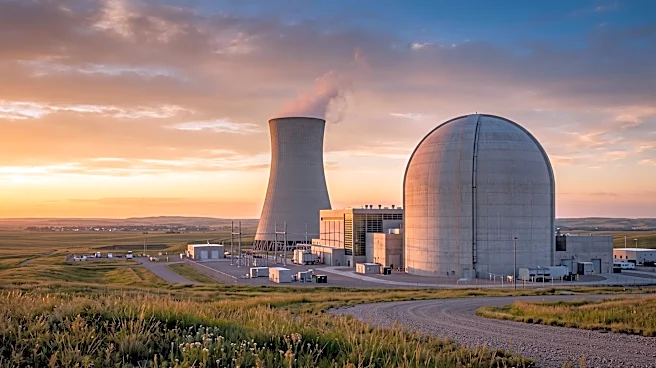
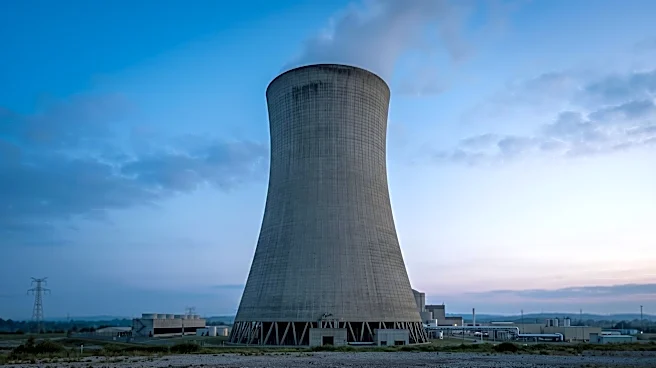
information for the 2027 civil service exam, signifies a refinement of the country's nuclear safety supervision framework. The establishment of these specialized divisions comes as China's nuclear power industry is undergoing accelerated development, with a growing number of projects under construction and in operation. China currently ranks first globally in nuclear power units under construction and second in operating units, with 65 units holding operating licenses. The MEE aims to strengthen safety oversight across the entire industrial chain, from construction and operation to maintenance, lifetime extension, decommissioning, and radioactive waste management.
Why It's Important?
While this news primarily concerns China's domestic nuclear power industry, it has indirect implications for the U.S. and global nuclear safety standards. As China expands its nuclear fleet, its regulatory practices and safety records will be closely watched by international bodies and other nuclear-powered nations, including the U.S. Any incidents or advancements in safety protocols in China could influence global best practices and international cooperation on nuclear energy. For the U.S., which also operates a significant number of nuclear power plants, understanding China's approach to regulatory oversight can provide valuable insights into managing the complexities of an expanding nuclear sector. The emphasis on specialized supervision throughout the entire lifecycle of nuclear facilities underscores the universal challenges and responsibilities associated with nuclear power, potentially fostering future dialogues on international safety benchmarks and technological exchanges.
What's Next?
The MEE will proceed with staffing the new Department of Nuclear Power Construction Safety Supervision and the Department of Nuclear Power Operation Safety Supervision, as indicated by the recruitment information for the 2027 civil service exam. This will involve building up professional talent reserves to enhance regulatory capacity. China plans to continue its accelerated development of nuclear power, with the number of operating units expected to approach 100 by 2030, potentially making it the global leader. The MEE will focus on implementing a comprehensive nuclear safety responsibility system, ensuring high-standard design, quality construction, and high-level operation of nuclear power plants. Safety oversight will also extend to nuclear fusion devices, radioactive sources, nuclear fuel cycle facilities, and decommissioning processes to ensure safety throughout the entire lifecycle.
Beyond the Headlines
The creation of specialized nuclear safety divisions in China reflects a global recognition of the inherent risks and long-term responsibilities associated with nuclear energy. This move goes beyond mere regulatory compliance; it signifies a commitment to public safety and environmental protection in the face of rapid industrial expansion. The long-term implications include the potential for China to set new benchmarks in nuclear safety, influencing international standards and practices. It also highlights the complex interplay between energy demands, technological advancement, and environmental stewardship. The ethical considerations of managing radioactive waste for millennia and ensuring the security of nuclear materials will remain paramount. This development could also spur greater international collaboration on nuclear safety research and emergency preparedness, as the consequences of a nuclear incident are not confined by national borders.