
What's Happening?
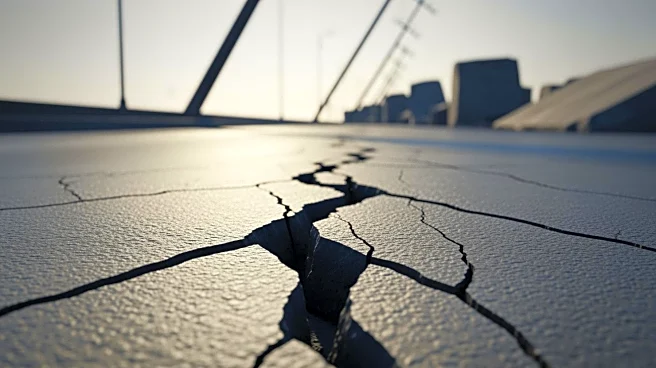
A 6.2 magnitude earthquake struck the western Chugoku region of Japan on January 5, 2026. The epicenter was located in eastern Shimane prefecture. The Japan Meteorological Agency reported that the earthquake was followed
by several sizeable aftershocks. Despite the intensity, there were no reports of injuries or tsunami threats. The earthquake caused significant infrastructure disruptions, including the suspension of Shinkansen bullet-train operations between Shin-Osaka and Hakata. The Chugoku Electric Power company, which operates the Shimane Nuclear Power Station located approximately 32 kilometers from the epicenter, confirmed that operations continued as usual, and Japan's Nuclear Regulation Authority reported no irregularities.
Why It's Important?
Japan is one of the most seismically active countries in the world, accounting for about one-fifth of the world's earthquakes of magnitude six or greater. The recent earthquake highlights the ongoing vulnerability of Japan's infrastructure to natural disasters. The suspension of the Shinkansen bullet-train operations underscores the potential for significant economic and logistical impacts, affecting both local and international travel and commerce. The continued operation of the Shimane Nuclear Power Station without incident is a positive outcome, given the historical context of nuclear safety concerns in Japan following the Fukushima disaster in 2011.
What's Next?
In the aftermath of the earthquake, Japanese authorities and infrastructure operators will likely conduct thorough inspections and assessments to ensure safety and prevent future disruptions. The event may prompt further discussions on enhancing earthquake preparedness and resilience, particularly in critical infrastructure sectors such as transportation and energy. Additionally, the international community may closely monitor Japan's response and recovery efforts, given the country's role as a global economic player.
Beyond the Headlines
The earthquake serves as a reminder of the broader challenges posed by natural disasters in seismically active regions. It raises questions about the long-term sustainability and safety of nuclear power in such areas, as well as the need for continuous investment in disaster preparedness and infrastructure resilience. The event may also influence public perception and policy discussions regarding energy security and environmental safety in Japan and beyond.