
What's Happening?
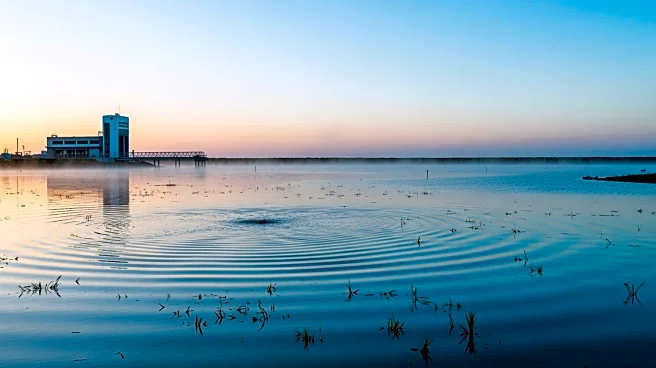
Blue Origin, the aerospace company founded by Jeff Bezos, is seeking permission from the Florida Department of Environmental Protection to continue operating its industrial wastewater treatment facility
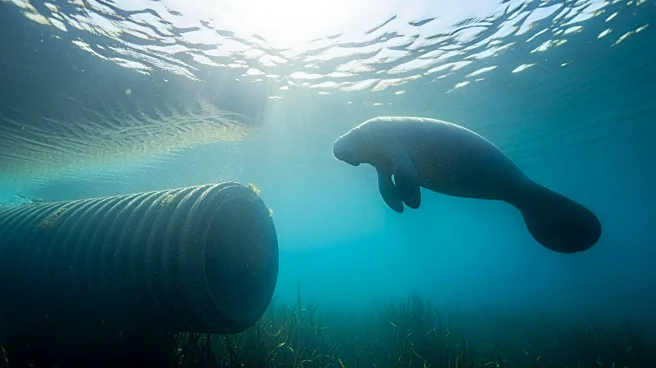
at Cape Canaveral Space Force Station. The company plans to discharge wastewater into the Indian River Lagoon, a 156-mile estuary recognized as an 'Estuary of National Significance' due to its rich biodiversity. The lagoon is home to over 2,100 plant species and more than 2,200 animal species, including numerous threatened and endangered species. Environmental groups and local communities have expressed concerns about the potential pollution and its impact on the lagoon's delicate ecosystem.
Why It's Important?
The Indian River Lagoon is a critical habitat for a wide variety of species, and its health is vital for maintaining biodiversity. Blue Origin's plan to discharge wastewater into the lagoon could exacerbate existing environmental issues, such as nutrient pollution and habitat loss, which have already led to significant ecological damage. The proposal has sparked opposition from environmentalists who argue that the lagoon's ecosystem is already under stress from rocket launches and other human activities. The outcome of this permit request could set a precedent for how industrial activities are managed in ecologically sensitive areas.
What's Next?
The Florida Department of Environmental Protection is currently reviewing Blue Origin's permit renewal request. Public meetings and discussions are expected to continue as stakeholders, including environmental groups and local residents, voice their concerns. The decision will likely influence future regulatory approaches to industrial wastewater management in Florida and potentially impact Blue Origin's operations and reputation.
Beyond the Headlines
This situation highlights the ongoing tension between technological advancement and environmental conservation. As companies like Blue Origin push the boundaries of space exploration, they must also navigate the ethical and environmental responsibilities associated with their terrestrial operations. The case underscores the need for sustainable practices that balance innovation with ecological preservation.