

What's Happening?
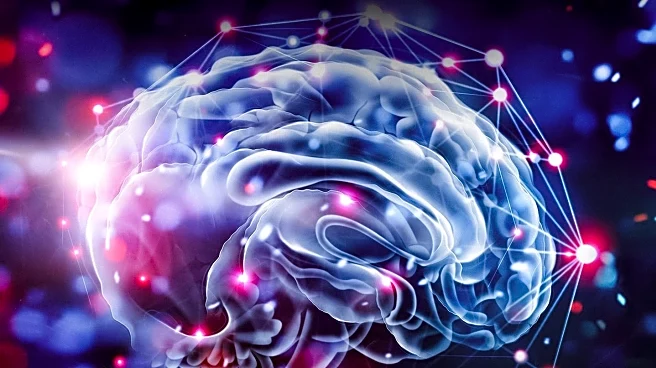
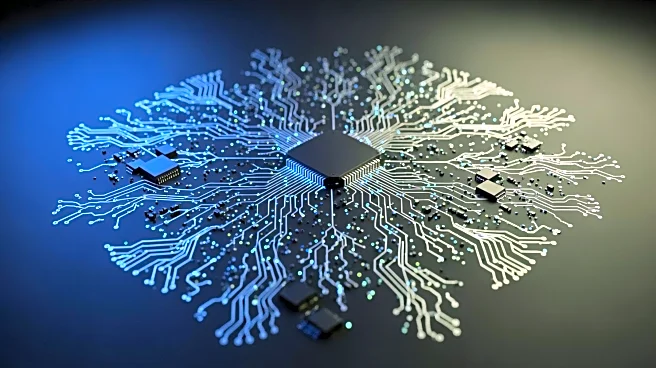
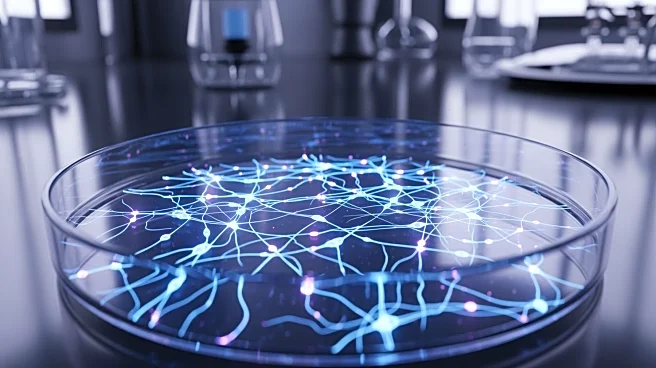
Scientists at Cortical Labs have successfully trained human brain cells grown on a microchip to play the video game Doom. This experiment builds on previous work where lab-grown neurons learned to play Pong. The current project involves translating the digital
world of Doom into electrical signals that the neurons can interpret, allowing them to control gameplay. The neurons respond to electrical stimulation patterns, which are interpreted as movement or shooting commands in the game. While the performance of these neurons is still basic, the experiment demonstrates the potential for biological computing.
Why It's Important?
This development is significant as it represents a step forward in the field of biological computing, where living cells are used to perform computational tasks. The ability to train neurons to interact with digital environments could have far-reaching implications for neuroscience, artificial intelligence, and biotechnology. It opens up possibilities for developing new interfaces between biological systems and machines, potentially leading to advancements in medical technology, brain-computer interfaces, and understanding of neural processes.
What's Next?
Future research may focus on improving the performance and capabilities of these neuron-based systems. Scientists could explore more complex tasks and refine the methods of translating digital information into biological signals. This could lead to breakthroughs in creating more sophisticated biological computers and enhancing our understanding of how the brain processes information.
Beyond the Headlines
The ethical implications of using human brain cells in computing experiments are an important consideration. As this field progresses, discussions around the moral and ethical boundaries of such research will become increasingly relevant. Additionally, the potential for these technologies to impact privacy and security in digital systems will need to be addressed.