






What's Happening?
Confirmed infestations of New World screwworm in the United States have surged past 100, reaching 116 cases across Texas, New Mexico, and Arizona, with 56 cases still active, according to the latest U.S. Department of Agriculture (USDA) data. This marks
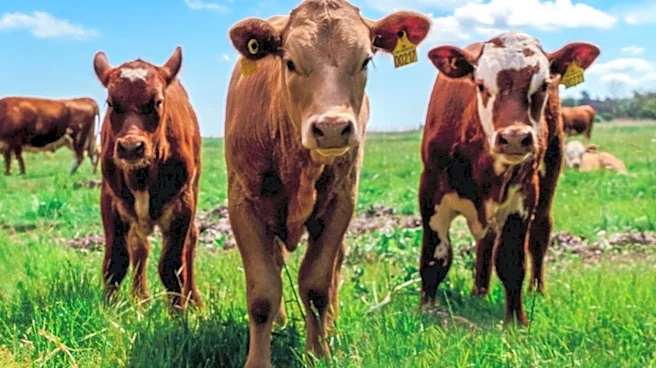
a nearly 47% increase from the previous week, indicating a rapid spread of the parasite since detections accelerated in October. The New World screwworm, a fly larva that burrows into the living tissue of warm-blooded animals, can be fatal within one to two weeks if untreated. The U.S. eradicated screwworm decades ago using a sterile insect technique, but the parasite has been pushing north again this year. Of the confirmed cases, 114 involve livestock and pets, while two involve wildlife, specifically elk in Texas. No human infestations have been reported in the current U.S. outbreak. Recent detections include cattle in Texas, a horse in Arizona, and horses, cattle, and a dog in New Mexico.
Why It's Important?
The significant surge in New World screwworm infestations poses a severe threat to the U.S. livestock industry and animal health. The parasite's ability to rapidly infest and kill animals can lead to substantial economic losses for ranchers and farmers in affected states. The re-emergence of screwworm, after decades of eradication, highlights vulnerabilities in biosecurity measures and the challenges of maintaining containment barriers. The USDA and Texas Animal Health Commission (TAHC) have expanded surveillance and urged quick reporting of suspected cases, emphasizing the critical need for early detection and intervention. The outbreak also impacts animal movement, with restrictions remaining in effect across parts of 16 Texas counties and affected areas of New Mexico and Arizona, disrupting agricultural operations and potentially affecting trade. The U.S. Food and Drug Administration (FDA) has authorized several medications for use in dogs and cats, underscoring the urgency of the situation.
What's Next?
Animal movement restrictions will continue in affected areas of Texas, New Mexico, and Arizona, with officials cautioning that reclassifying a case as inactive does not mean the area is free of the parasite. Surveillance and monitoring of animal movement will be intensified by TAHC and USDA. Ranchers, pet owners, and veterinarians are urged to report suspected cases promptly and to regularly check animals for unusual wounds or behavioral changes. The USDA announced the completion of a sterile fly dispersal facility in Edinburg, Texas, intended to breed and release sterile male flies near the border to push back the parasite’s northward spread. However, Mexico has also reported rising numbers of screwworm cases, leading to intermittent suspensions of livestock imports from Mexico at the southern border. The long-term strategy will involve sustained efforts to control the parasite's spread and prevent its re-establishment in the U.S.
Beyond the Headlines
The rapid increase in New World screwworm cases underscores the complex and persistent nature of transboundary animal diseases. The historical success of the sterile insect technique in eradicating screwworm from the U.S. was a major achievement, and its current re-emergence highlights the continuous need for robust biosecurity infrastructure and international cooperation. The outbreak reveals the vulnerabilities that can arise from factors such as funding delays, bureaucracy, and political tensions, which have been cited as contributing to the slow response in scaling up sterile fly production. This situation has broader implications for U.S. agricultural policy, trade relations with neighboring countries, and the allocation of resources for animal health programs. It serves as a critical reminder that vigilance and proactive measures are essential to protect national animal populations and the economy from biological threats.