










What's Happening?
A government watchdog report has confirmed that the federal civilian workforce in the United States shrank by nearly 256,000 employees, or 11.3%, across major agencies in 2025. This reduction is attributed to the Trump administration's workforce cuts,
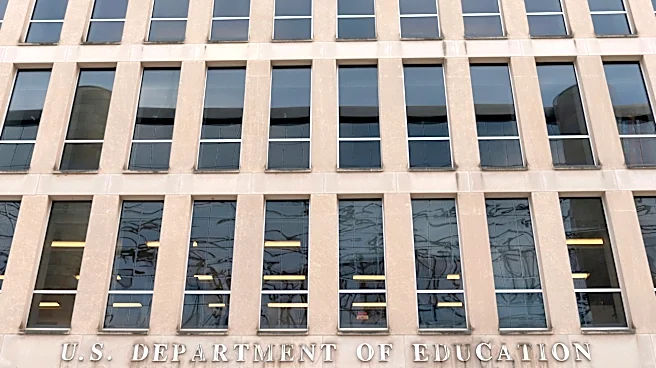
as reported by the Government Accountability Office (GAO). The workforce across 22 of 24 major federal agencies decreased from 2.27 million to 2.01 million employees between December 2024 and January 2026. The net reduction resulted from approximately 378,000 separations, offset by about 127,000 new hires. The Department of Education experienced the steepest decline, losing 45.6% of its workforce. Other significant reductions occurred in the General Services Administration, Housing and Urban Development, and the Department of Energy. The Internal Revenue Service also saw a reduction of over 5,000 employees. Despite these cuts, experts like Chris Edwards from the Cato Institute suggest that the fiscal impact was limited, saving taxpayers about $41 billion annually, which is just over 2% of the federal deficit.
Why It's Important?
The reduction in the federal workforce is significant as it reflects the Trump administration's efforts to streamline government operations and reduce costs. However, the limited impact on the federal deficit highlights the complexity of balancing workforce reductions with fiscal responsibility. The cuts, particularly in agencies like the IRS, could potentially affect revenue collection and enforcement capabilities, which are crucial for maintaining government operations. Additionally, the reduction in workforce in areas where state governments already operate similar programs suggests a shift towards decentralization and reliance on state-level governance. This move could lead to changes in how federal and state governments interact and share responsibilities.
What's Next?
The long-term effects of these workforce reductions remain to be seen, particularly in terms of government efficiency and service delivery. As the Congressional Budget Office projects an increase in the deficit from 5.8% of GDP in 2026 to 6.7% by 2036, further measures may be needed to address fiscal challenges. The potential for increased interest payments on the national debt, which already surpassed $970 billion in fiscal year 2025, could necessitate additional budgetary adjustments. Stakeholders, including political leaders and government agencies, may need to reassess priorities and strategies to ensure sustainable fiscal health.