





What's Happening?
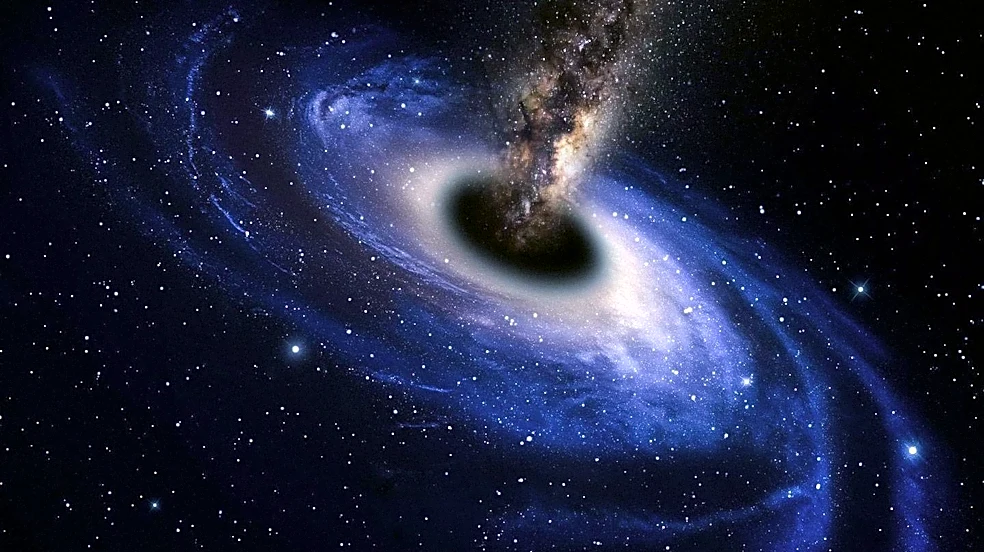
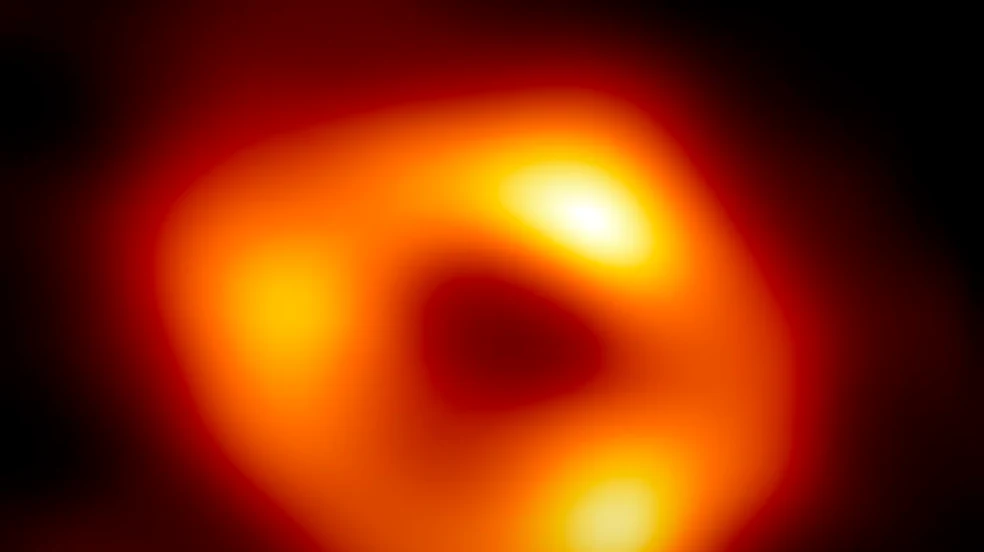
Astronomers have discovered a critical 2% threshold of the Eddington limit that dictates when supermassive black holes launch delayed jets of matter. This finding, published in Nature Astronomy, reveals that these powerful jets appear when a black hole's
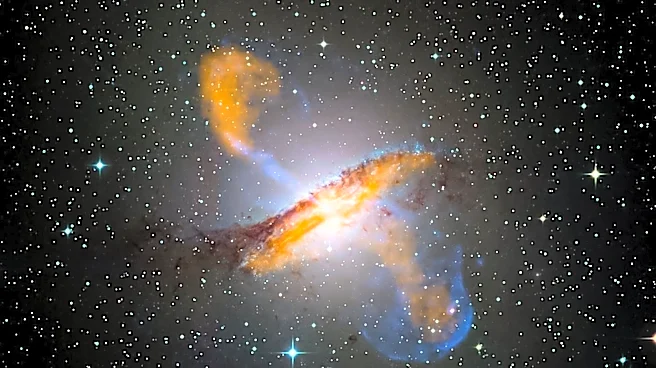
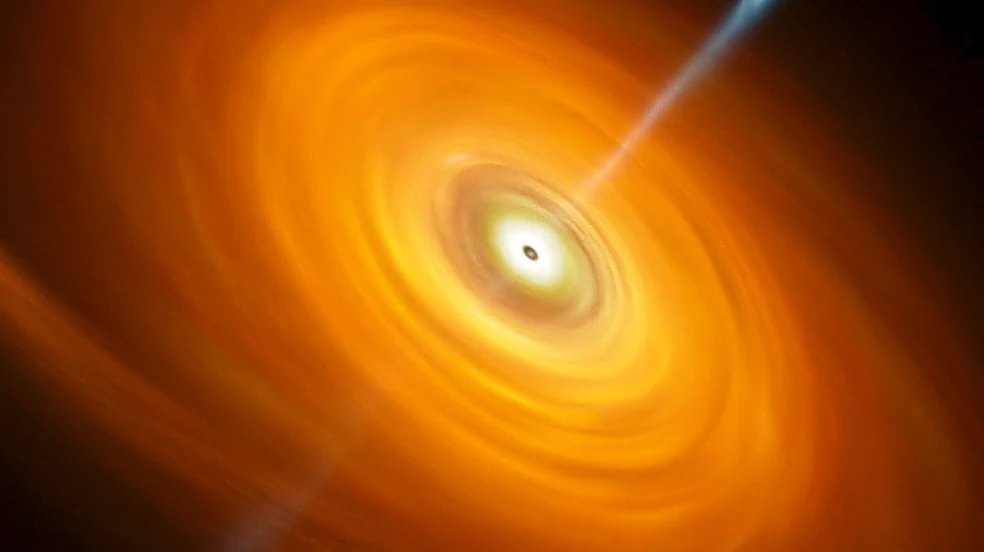
feeding rate drops to approximately 2% of its Eddington limit. The Eddington limit is a theoretical benchmark where the outward pressure from radiation balances the inward pull of gravity. This same relative threshold was previously observed in much smaller black holes within the Milky Way, suggesting a universal behavior across different black hole sizes. The research, led by astrophysicist Adele Goodwin of the Curtin University node of the International Centre for Radio Astronomy Research and Andrew Mummery of the Institute for Advanced Study in Princeton, analyzed 20 tidal disruption events where stars were torn apart by black holes. They found that while some jets appear immediately after a star's destruction, others are delayed for months or years, consistently emerging when the feeding rate hits this 2% mark.
Why It's Important?
This discovery significantly advances our understanding of black hole physics and their interaction with surrounding matter. By identifying a universal threshold for jet formation, astronomers can now more accurately predict when and where to observe these powerful cosmic phenomena. This predictability is crucial for optimizing the use of radio telescopes and other observational instruments, leading to more efficient and targeted research. The ability to anticipate jet emissions will allow scientists to gather more comprehensive data on the processes that drive these energetic outflows, which play a vital role in galaxy evolution. Understanding these jets can shed light on how black holes influence the distribution of gas and dust in galaxies, potentially affecting star formation and the overall structure of cosmic systems. This breakthrough also reinforces the idea of universal physical laws governing black holes, regardless of their mass, providing a unified framework for studying these enigmatic objects.
What's Next?
The identification of this 2% threshold will enable astronomers to plan future radio telescope observations with greater precision. When a tidal disruption event is detected, researchers can now estimate the expected timing of a delayed jet's appearance, allowing them to focus their observational efforts more effectively. This predictive capability will facilitate the collection of more detailed data on the conditions leading to jet formation and evolution. Future studies will likely involve monitoring newly observed tidal disruption events to confirm this threshold and explore any potential variations. This could lead to a deeper understanding of the physical mechanisms behind jet launching, including the role of magnetic fields and accretion disk dynamics. The findings may also inspire new theoretical models to explain this universal behavior, further refining our understanding of black hole accretion and outflow processes.
Beyond the Headlines
The discovery of a universal 2% Eddington limit threshold for black hole jet formation has profound implications beyond immediate observational planning. It suggests a fundamental, scale-independent physical process governing how black holes interact with their environment, regardless of whether they are stellar-mass or supermassive. This universality hints at underlying principles that could unify our understanding of black hole accretion across vast cosmic scales. The energy released in these jets can have a significant impact on the intergalactic medium, potentially influencing the growth of galaxies and the distribution of matter in the universe over billions of years. Furthermore, the study of these extreme environments pushes the boundaries of physics, testing theories of gravity and plasma dynamics under conditions that cannot be replicated on Earth. This research contributes to humanity's ongoing quest to comprehend the most powerful and mysterious objects in the cosmos, offering insights into the fundamental forces that shape our universe.