





What's Happening?
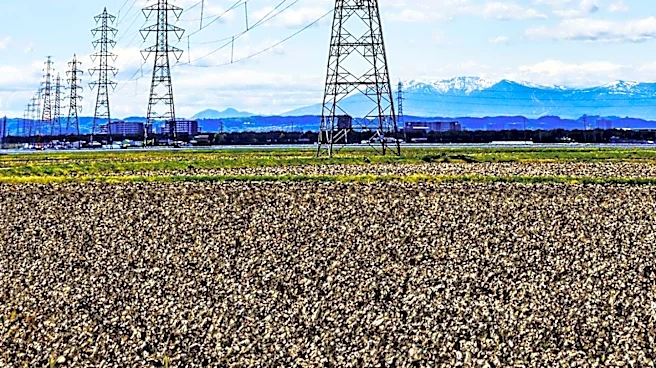
The U.S. Department of Energy (DOE) has approved the North Plains Connector Project, a 422-mile, 525-kilovolt high-voltage direct current (HVDC) overhead transmission line between Colstrip, Montana, and North Dakota. This approval follows the release
of the Final Environmental Impact Statement (FEIS) by the DOE and the Montana Department of Environmental Quality (MTDEQ). The project aims to connect the Western and Eastern Interconnections of the U.S. power grids, providing 3,000 megawatts (MW) of bidirectional transfer capability. This development comes nearly two years after the DOE canceled a similar 645-mile Delta-Plains transmission line project across northern Oklahoma due to significant local opposition, including concerns about eminent domain.
Why It's Important?
The North Plains Connector Project is deemed a critical step towards enhancing long-term energy affordability and reliability for millions of Americans by bridging the western and eastern power grids. This increased transmission capacity will allow electricity to be moved more efficiently to where and when it is needed, improving grid resilience and mitigating weather-driven outages. The project is expected to support communities and meet rising energy demands in Montana, North Dakota, and nationally. The contrast with the canceled Oklahoma project highlights the complexities of infrastructure development, particularly the balance between national energy needs and local community concerns, especially regarding property rights and eminent domain.
What's Next?
With the approval of the Final Environmental Impact Statement, the North Plains Connector Project is moving forward. The project's implementation will involve the construction of the 422-mile transmission line, which is designed to significantly enhance grid reliability and resilience across the region. The DOE's Office of Electricity (OE) coordinated the federal review process, completing the National Environmental Policy Act (NEPA) process well within the two-year maximum timeline, consistent with the framework of the Coordinated Interagency Transmission Authorizations and Permits (CITAP) program. This expedited review process suggests a concerted effort to advance critical energy infrastructure projects.
Beyond the Headlines
The approval of the North Plains Connector Project, juxtaposed with the cancellation of the Delta-Plains project in Oklahoma, underscores the varying degrees of local and state resistance to large-scale energy infrastructure. While both projects aimed to improve grid reliability, the strong opposition in Oklahoma, particularly concerning eminent domain, proved to be a decisive factor. This situation highlights the ongoing tension between federal energy policy objectives and states' rights, as well as the critical role of public engagement and local sentiment in the success or failure of such initiatives. The project also reflects a broader national strategy to modernize and interconnect the U.S. power grid to address increasing demand and climate-related challenges.