






What's Happening?
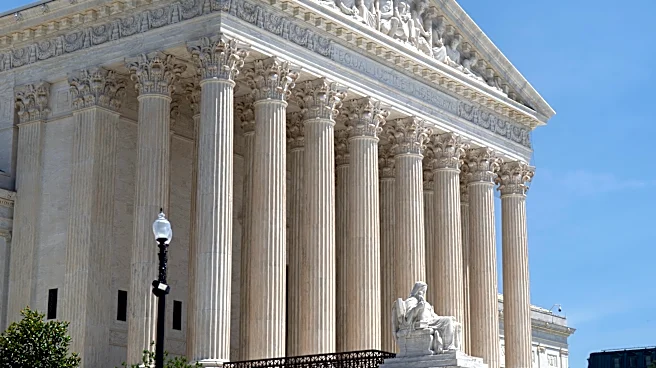
Massachusetts congressional members have been actively voicing their opinions on recent Supreme Court decisions and local issues through social media. Representative Seth Moulton expressed concern over a Supreme Court decision affecting the transgender
community, emphasizing the need for continued protection against discriminatory bans. Additionally, Moulton is running against Senator Markey in the Democratic primary. Congresswoman Lori Trahan criticized President Trump for holding a housing bill hostage, which she argues would make homes more affordable. She also highlighted the efforts of local public works in response to a wastewater overflow in Haverhill. Meanwhile, Representative Jim McGovern condemned a Supreme Court ruling that allows unlimited political spending, arguing it undermines democracy. The Massachusetts delegation is also focused on issues such as healthcare, with Ayanna Pressley celebrating a mandate on healthcare and dignified work in Denver.
Why It's Important?
The reactions from Massachusetts lawmakers underscore the ongoing political and social debates in the U.S. The Supreme Court's decisions have significant implications for civil rights, particularly for the transgender community, and highlight the contentious nature of political spending in elections. The housing bill controversy reflects broader national debates on affordability and economic policy, with potential impacts on housing markets and economic stability. The local environmental issue in Haverhill points to the importance of infrastructure and environmental management, which are critical for public health and economic stability. These discussions are indicative of the broader challenges facing the U.S., including civil rights, economic inequality, and environmental sustainability.
What's Next?
As the Massachusetts congressional members continue to engage with these issues, further legislative and political actions are likely. The Democratic primary between Moulton and Markey could influence the state's political landscape. The housing bill's fate remains uncertain, with potential implications for national housing policy. The Supreme Court's decisions may prompt legislative responses or further legal challenges. Local environmental issues may lead to increased focus on infrastructure investment and environmental protection. Stakeholders, including political leaders, advocacy groups, and the public, will likely continue to engage in these debates, shaping future policy directions.
Beyond the Headlines
The broader implications of these developments include potential shifts in political power dynamics, particularly in Massachusetts, where primary challenges could reshape the Democratic Party's approach. The Supreme Court's rulings may influence future judicial appointments and the balance of power within the court. The focus on environmental issues in Massachusetts highlights the growing importance of sustainable practices and infrastructure resilience in the face of climate change. These events also reflect the ongoing struggle for civil rights and economic justice in the U.S., with potential long-term impacts on social cohesion and public trust in institutions.