



What's Happening?
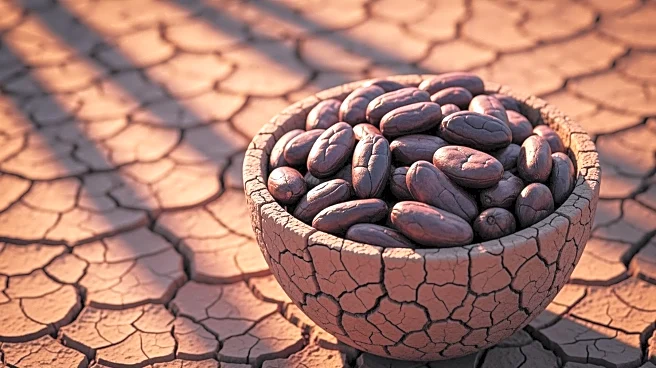
Côte d'Ivoire, a major supplier of cocoa to the U.S. and Europe, is facing severe water scarcity issues that threaten its cocoa production. Despite the global cocoa trade's significant economic value, the country struggles with inadequate access to safe
water and sanitation. Cocoa-growing communities rely on unsafe water sources, leading to health issues such as malaria and diarrhea. The cocoa industry, which contributes significantly to the country's GDP, is also linked to deforestation and child labor. The water-intensive nature of cocoa farming exacerbates the scarcity, highlighting the need for sustainable water management practices.
Why It's Important?
The water scarcity in Côte d'Ivoire's cocoa industry has far-reaching implications for global chocolate supply chains and the livelihoods of millions dependent on cocoa farming. As a key ingredient in chocolate, disruptions in cocoa production can lead to supply shortages and increased prices. The situation underscores the importance of addressing environmental and social issues within the cocoa supply chain, including sustainable water use and improved living conditions for farmers. It also highlights the need for international cooperation and investment in sustainable agricultural practices to ensure the industry's long-term viability.
What's Next?
Efforts to address water scarcity in Côte d'Ivoire may involve increased investment in water infrastructure and sanitation facilities for cocoa-growing communities. International chocolate companies and governments could collaborate to implement sustainable farming practices and support community development projects. Additionally, there may be a push for greater transparency and accountability within the cocoa supply chain to address environmental and social challenges. These initiatives could help secure the future of cocoa production and improve the livelihoods of those involved in the industry.