









What's Happening?
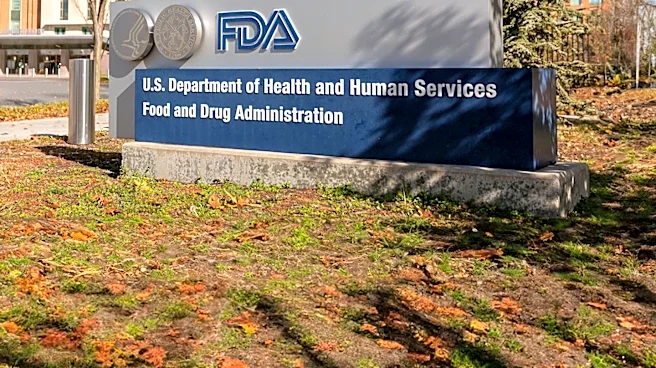
Nkarta, a clinical-stage biotechnology company, has announced that the Food and Drug Administration (FDA) has agreed to protocol amendments for its CAR natural killer (NK) cell therapy trials for autoimmune diseases. According to CEO Paul Hastings, these
amendments remove several previous restrictions, including patient-by-patient dosing staggers, a 24-hour observation period post-cell administration, and a requirement for patients to remain within 60 miles of the treatment center for 30 days. Under the revised protocol, patients can now receive off-the-shelf cells, be observed for only two hours, and return home. Nkarta is currently studying this treatment across two investigational new drug applications: Ntrust-1, focusing on lupus nephritis, and Ntrust-2, a basket study for conditions like scleroderma, myositis, vasculitis, and rheumatoid arthritis. The company aims to present initial clinical data from these autoimmune disease programs at the American College of Rheumatology's 2026 Convergence meeting in November, with presentations covering myositis, scleroderma, and program-wide safety.
Why It's Important?
These FDA protocol amendments are significant as they facilitate outpatient administration of Nkarta's off-the-shelf CAR NK therapy, potentially broadening patient access and reducing treatment burdens. The ability to administer the therapy in an outpatient setting, with a reduced observation period and no prolonged proximity requirements, could make this innovative treatment more accessible to a wider patient population. This shift could also alleviate the logistical and financial strain on both patients and healthcare systems, as it minimizes the need for extended hospital stays and specialized care. Nkarta's approach, which aims to offer the therapeutic benefits of autologous CAR T therapies with fewer treatment burdens and immune-related toxicities, could represent a significant advancement in the treatment of autoimmune diseases. The company's focus on outpatient administration and on-demand availability positions it to potentially disrupt the current treatment landscape for these chronic conditions, offering a more convenient and potentially safer alternative.
What's Next?
Nkarta plans to present initial clinical data from its autoimmune disease programs at the American College of Rheumatology's 2026 Convergence meeting in November. These presentations will include data on myositis, scleroderma, and overall program safety, with several patients having approximately three months of follow-up. The company expects this data to provide insights into dose response, durability, and retreatment. Following the review of available data, Nkarta intends to narrow its focus to the most promising autoimmune indications. CEO Paul Hastings expressed high confidence in initiating a potential registrational study before the end of 2027, while continuing to generate longer-term durability data. The company is also evaluating a potentially more compressed dosing regimen with regulators and has expanded trial access by adding community-based treatment centers and patient-support services.
Beyond the Headlines
The shift towards outpatient administration for CAR NK cell therapy highlights a broader trend in medical innovation: the pursuit of highly effective treatments that are also less invasive and more patient-friendly. If Nkarta's CAR NK therapy proves to be as effective as CAR T therapies with a better safety profile and outpatient feasibility, it could set a new standard for autoimmune disease treatment. This development could also influence regulatory approaches for other advanced cell therapies, potentially encouraging more flexible guidelines for treatments that demonstrate strong safety and efficacy in less restrictive settings. The emphasis on patient-reported outcomes and B-cell depletion analysis, including lymph-node biopsies, indicates a comprehensive approach to understanding the therapy's impact, moving beyond traditional clinical measures to capture the real-world experience of patients. This holistic evaluation could lead to more patient-centric drug development and regulatory approval processes in the future.