


What's Happening?
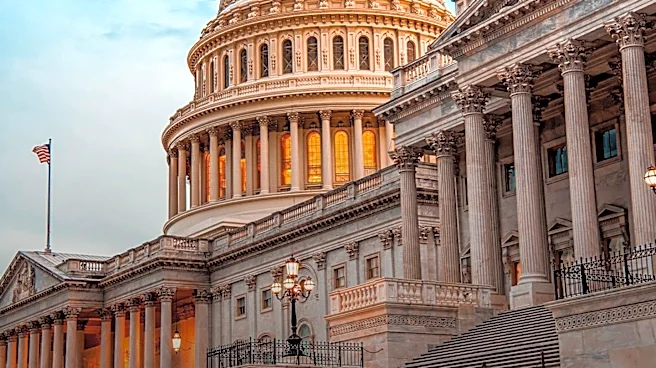
The U.S. House of Representatives has passed the PROOF Act, a piece of legislation designed to enhance information sharing between state agencies and federal law enforcement to combat fraud. This bill received support from Mississippi Congressmen Trent
Kelly, Michael Guest, and Mike Ezell. The PROOF Act aims to provide investigators with the necessary information to identify and address fraud in federally funded programs, including Medicaid, unemployment benefits, and disaster assistance. Mississippi Treasurer David McRae highlighted the importance of this legislation, noting that criminals often exploit gaps between agencies and states. He emphasized that every dollar lost to fraud is a dollar that cannot be allocated to essential services like roads, schools, healthcare, and support for vulnerable families. The legislation, however, did not receive the support of Congressman Bennie Thompson.
Why It's Important?
The passage of the PROOF Act is a significant step in strengthening the national defense against fraud, particularly in programs funded by taxpayer dollars. By facilitating better information exchange, the act aims to prevent fraud before it occurs, rather than solely focusing on recovery after the fact. This proactive approach is crucial for safeguarding public funds and ensuring that resources are directed to their intended beneficiaries. For U.S. industries and economic stakeholders, reducing fraud can lead to more efficient government spending and potentially lower the burden on taxpayers. The involvement of Mississippi congressmen underscores a bipartisan (though not unanimous) recognition of the need for robust anti-fraud measures, reflecting a broader national concern about financial integrity in public programs. The legislation's impact could be felt across various sectors that interact with federally funded initiatives, promoting greater accountability and trust.
What's Next?
Following its passage in the U.S. House, the PROOF Act will proceed to the Senate for consideration. If passed by the Senate and signed into law, the act will mandate or encourage enhanced data-sharing protocols between state and federal entities. This will likely lead to the development of new inter-agency agreements and technological solutions to facilitate secure and efficient information exchange. State treasuries and federal law enforcement agencies will need to adapt their systems and procedures to comply with the new requirements, potentially involving training and infrastructure upgrades. The effectiveness of the act will depend on the willingness of various agencies to collaborate and the robustness of the implemented data-sharing mechanisms. Continued monitoring and evaluation will be necessary to assess its impact on reducing fraud and improving the integrity of federally funded programs.
Beyond the Headlines
The PROOF Act addresses a critical vulnerability in the administration of public funds: the fragmentation of information across different governmental jurisdictions. Fraudsters often exploit these jurisdictional boundaries, making it difficult for any single agency to get a complete picture of fraudulent activities. By promoting cross-state and cross-agency data sharing, the act aims to create a more unified and resilient defense system. This initiative also highlights the evolving nature of fraud, which has become increasingly sophisticated, often leveraging technological advancements. The legislation implicitly acknowledges that combating modern fraud requires a coordinated, technologically informed response. Furthermore, the act touches upon the ethical dimension of public service, emphasizing the responsibility of government to be good stewards of taxpayer money. Its success could set a precedent for future inter-agency collaborations on other complex issues that transcend state lines.