






What's Happening?
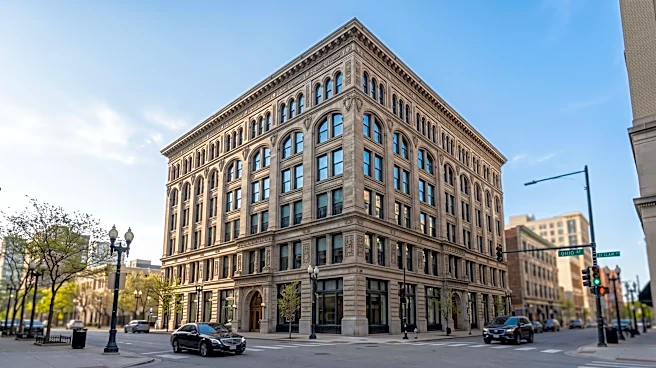
Pre-leasing has commenced for Rohe House, a 72-unit residential conversion project located at 230 E. Ohio in Chicago's Streeterville neighborhood. This initiative is transforming the historic Pelouze Building, originally constructed in 1917, into modern
apartments, with the first move-ins anticipated for January 2027. The conversion will yield six studios, 54 one-bedroom, and 12 two-bedroom apartments, averaging 811 square feet, featuring open-concept layouts and downtown views. Notably, the project will include 50 bike parking spaces but no car parking, while retaining ground-floor retail. Rohe House is part of a broader trend in Chicago, with nearly two dozen private office-building conversions in the pipeline, expected to create close to 4,000 new residential units. The city's Department of Planning and Development is also pursuing six office conversions under the LaSalle Street Reimagined initiative, aiming for 1,765 mixed-income housing units.
Why It's Important?
The Rohe House project exemplifies Chicago's strategic response to high downtown office vacancy rates, which stand at 28% citywide and nearly 25% on LaSalle Street. By converting underutilized office space into residential units, the city is addressing its housing shortage while revitalizing commercial districts. This trend helps to increase foot traffic, support local businesses, and generate new property tax revenue, contributing to the economic health of downtown areas. The emphasis on bike parking over car parking in Rohe House also reflects a growing urban planning trend towards sustainable transportation and reduced reliance on personal vehicles. The inclusion of mixed-income housing units in broader city initiatives like LaSalle Street Reimagined is crucial for ensuring equitable access to housing and fostering diverse urban communities.
What's Next?
The pre-leasing for Rohe House indicates that the project is on track for its January 2027 move-in date. The success of this and other ongoing conversions will likely influence future development strategies in Chicago. The city's Department of Planning and Development will continue to advance its LaSalle Street Reimagined initiative, potentially expanding the scope of office-to-residential conversions. Developers will likely monitor market demand for these new residential units and the economic viability of such projects, which could lead to further investment in adaptive reuse. The focus on sustainable features like bike parking may also become a more common element in future urban developments, aligning with broader environmental goals.
Beyond the Headlines
The conversion of historic buildings like the Pelouze Building into residential spaces carries significant cultural and architectural implications. It represents a commitment to preserving urban heritage while adapting to contemporary needs, preventing the demolition of valuable structures. The shift from car-centric development to more pedestrian and bike-friendly infrastructure, as seen in Rohe House, signals a broader evolution in urban living, promoting healthier and more sustainable lifestyles. This trend also raises questions about the long-term character of downtown areas, transforming them from purely commercial hubs into vibrant, mixed-use neighborhoods where people live, work, and socialize. The challenge will be to balance preservation with modernization, ensuring that new developments enhance rather than detract from the city's unique identity.