







What's Happening?
During the America 250 celebrations in Washington, D.C., President Donald Trump presented a U.S. flag to the crew of NASA's Artemis II mission, intended to be planted on the moon during a future mission. The event took place on July 4, where President Trump delivered
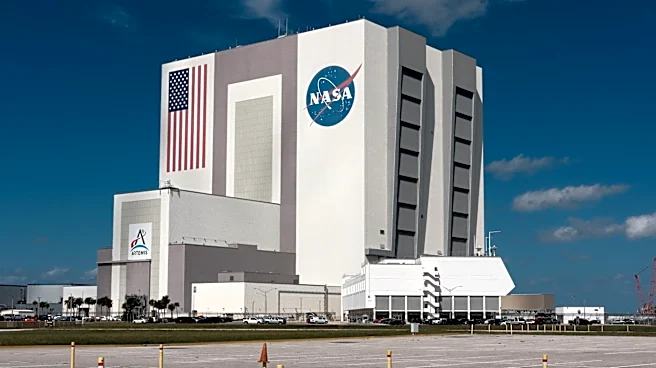
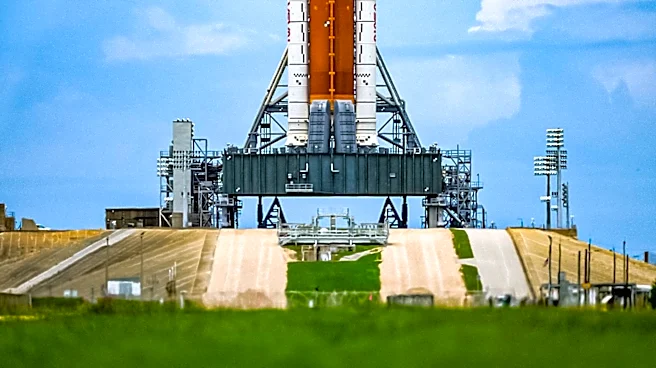
a keynote address highlighting American achievements and honoring various American heroes, including the Artemis II astronauts. The Artemis II mission, which launched on April 1, was the first crewed mission of NASA's Artemis program, taking astronauts farther from Earth than any previous crewed spaceflight. The mission's success has set the stage for future Artemis missions, with Artemis III and Artemis IV planned for 2027 and 2028, respectively. These missions aim to return astronauts to the lunar surface and establish a permanent base.
Why It's Important?
The presentation of the flag symbolizes the ongoing commitment of the United States to space exploration and the Artemis program's goal of returning humans to the moon. This gesture underscores the historical significance of American achievements in space and the continuation of this legacy. The Artemis program is crucial for advancing scientific knowledge, fostering international collaboration, and inspiring future generations. The successful execution of Artemis II and the planned missions of Artemis III and IV are pivotal in maintaining U.S. leadership in space exploration, potentially leading to technological advancements and economic opportunities in the space industry.
What's Next?
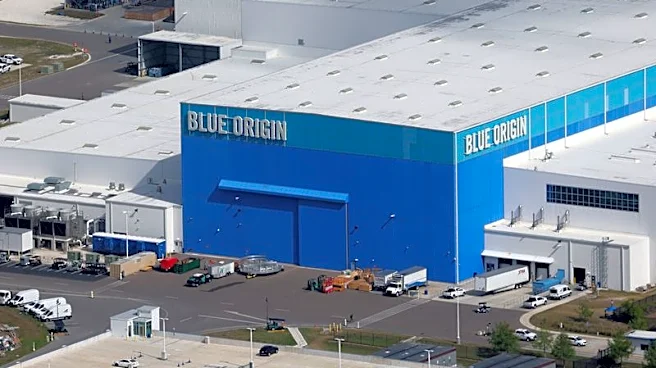
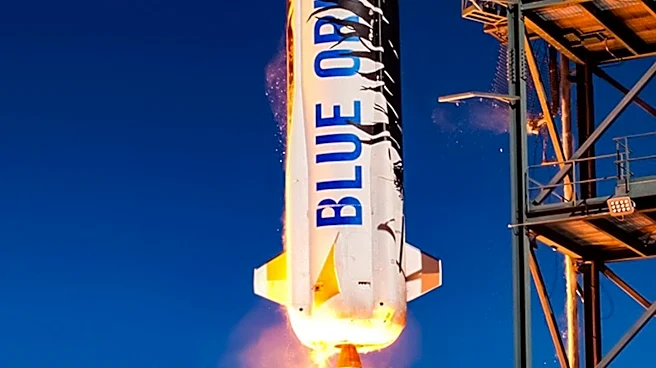
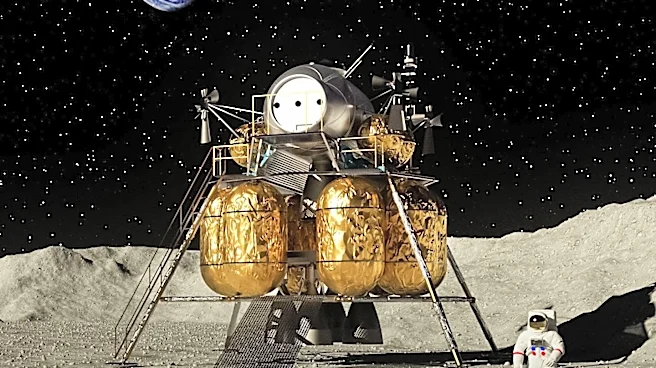
NASA is preparing for the upcoming Artemis III and IV missions, with Artemis III scheduled for mid-to-late 2027. This mission will involve a rendezvous and docking operation with commercial lunar landers, including SpaceX's Starship and Blue Origin's Blue Moon. Artemis IV, planned for 2028, aims to deliver astronauts to the lunar surface. The flag presented by President Trump will be planted on the moon during one of these missions, symbolizing the continuation of American exploration. The success of these missions will depend on the collaboration between NASA and commercial partners, as well as the resolution of any technical and logistical challenges that may arise.