





What's Happening?
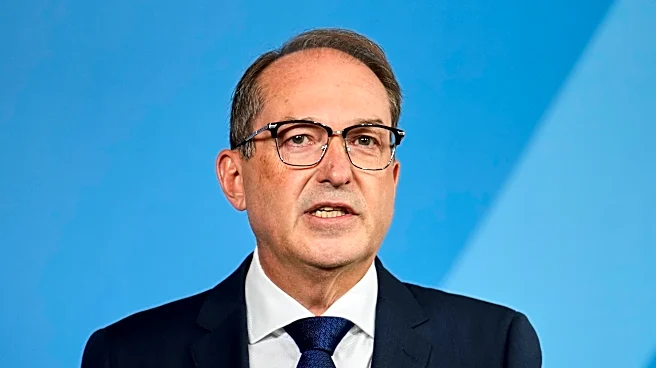
The German Institute for International and Security Affairs (SWP) has identified a new and evolving form of security threat from Russia, characterized by the use of 'one-time agents' for hybrid operations. Dr. Julian Pawlak, an analyst at SWP, notes that
Russia is moving away from relying solely on trained intelligence officers, instead employing petty criminals and private individuals who are paid for specific actions and often unaware of their ultimate sponsors. These agents are tasked with carrying out acts of sabotage, particularly targeting critical infrastructure such as railway and energy systems. Recent incidents in Germany, including two sabotage acts near the Jänschwalde coal-fired power plant and a possible attempt near a key power station in Bergheim, along with an explosion at Augsburg station and an unsuccessful sabotage attempt at Leipzig airport, are cited as examples of this new pattern. The German government has attributed the Leipzig airport incident to Russia. This shift in tactics makes these operations cost-effective for the perpetrators while posing significant challenges for defense, as dispersed and often privately managed infrastructures are difficult to fully protect.
Why It's Important?
This development signifies a critical shift in the landscape of national security, moving beyond traditional espionage to a more decentralized and deniable form of hybrid warfare. The use of 'one-time agents' lowers the operational cost and increases the plausible deniability for state actors like Russia, making it harder to attribute attacks and formulate a proportionate response. For the U.S. and its allies, this poses a significant challenge to critical infrastructure protection, as similar tactics could be employed against their own extensive and often vulnerable networks. The economic impact could be substantial, with disruptions to energy grids, transportation systems, and other essential services leading to widespread economic instability and public panic. Furthermore, the difficulty in identifying and prosecuting these agents could erode public trust in security agencies and governmental ability to protect its citizens and vital assets. The strategy exploits the inherent vulnerabilities of modern, interconnected societies, where the cost of defense far outweighs the cost of attack, making it an attractive option for adversaries seeking to destabilize without direct military confrontation.
What's Next?
In response to these evolving threats, Dr. Julian Pawlak emphasizes the urgent need for enhanced international cooperation among nations. He argues that analyzing these incidents in isolation prevents the detection of a broader, coordinated campaign. Therefore, cross-border analysis and collaboration with international partners are essential to identify common recruitment channels, payment methods, and characteristics of explosive devices used in such attacks. Increased information sharing and joint investigative efforts could help uncover the full scope and structure of these decentralized operations. Major stakeholders, including political leaders, intelligence agencies, and critical infrastructure operators, will likely need to re-evaluate existing security protocols and invest in more resilient defense mechanisms. There may also be a push for new legislative frameworks to address the legal complexities of prosecuting 'one-time agents' and holding state sponsors accountable. The ongoing series of events suggests a potential escalation of these hybrid tactics, necessitating a unified and proactive defense strategy.
Beyond the Headlines
The emergence of 'one-time agents' in hybrid warfare introduces profound ethical and legal dilemmas. These individuals, often recruited from marginalized or criminal backgrounds, may be exploited without full comprehension of the geopolitical implications of their actions, raising questions about culpability and justice. The decentralized nature of these attacks blurs the lines of traditional warfare, challenging international laws and norms designed for state-on-state conflicts. This tactic could foster a climate of distrust and paranoia within societies, as the source of disruption becomes increasingly opaque and internal vulnerabilities are exploited. Culturally, it could lead to increased xenophobia or suspicion towards certain groups if agents are perceived to be from specific communities. In the long term, this shift could fundamentally alter the nature of international security, moving towards a persistent, low-level conflict where state actors use proxies to wage war below the threshold of conventional military engagement, making it difficult to define aggression and respond effectively.