


What's Happening?
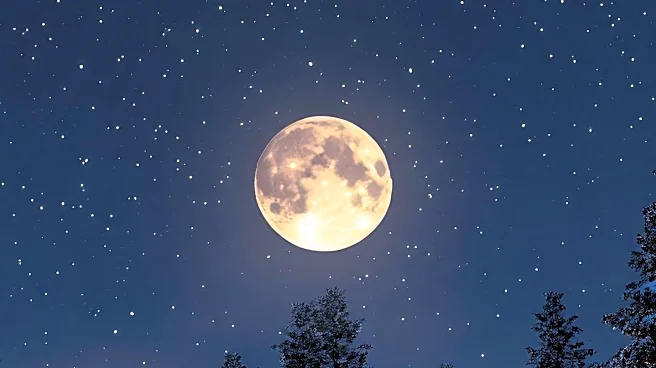
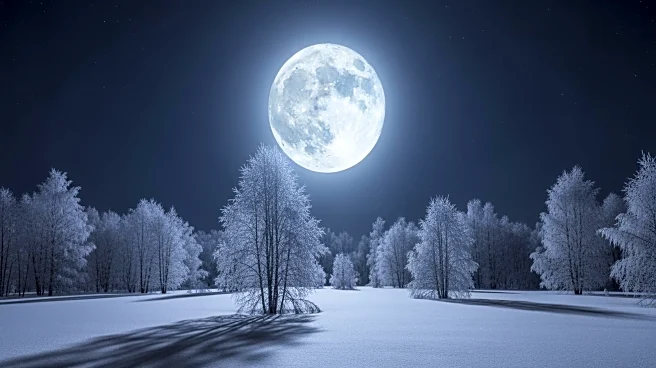
February begins with the Snow Moon, the month's full moon, which will peak on February 1 at 5:09 p.m. ET, according to the Old Farmer's Almanac. This celestial event is named the Snow Moon due to the heavy snowfall typically experienced in the Northern
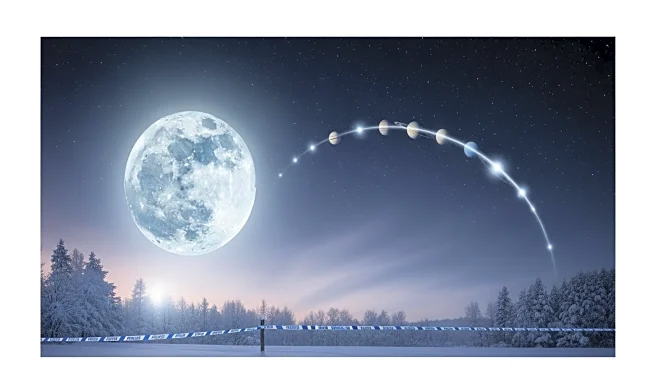
Hemisphere during this time. The moon will appear full for several days, providing ample opportunity for viewing. The National Oceanic and Atmospheric Administration (NOAA) forecasts that over half of the U.S. will have clear skies on the evening of February 1, although cloud coverage may vary. The Snow Moon is part of a series of lunar events in 2026, including a total lunar eclipse, known as the Worm Moon, on March 3.
Why It's Important?
The Snow Moon offers a unique opportunity for amateur astronomers and the general public to engage with astronomy. Such events can spark interest in space science and provide educational opportunities about lunar cycles and their cultural significance. The visibility of the Snow Moon across much of the U.S. can also foster a sense of shared experience and appreciation for natural phenomena. Additionally, the series of lunar events in 2026, including eclipses and super moons, highlights the dynamic nature of our solar system and encourages public interest in astronomical studies.
What's Next?
Following the Snow Moon, the next significant lunar event is the Worm Moon on March 3, which will feature a total lunar eclipse visible across North America. This event, also known as a blood moon, will provide another opportunity for sky watchers to observe a rare astronomical phenomenon. As the year progresses, additional full moons and eclipses will continue to captivate audiences and provide further opportunities for public engagement with astronomy.