







What's Happening?
China's economy has experienced a significant slowdown, growing at an annualized rate of 4.3% in the second quarter of 2026, marking the slowest pace since late 2022. This deceleration is attributed to a combination of factors, including a decline in domestic
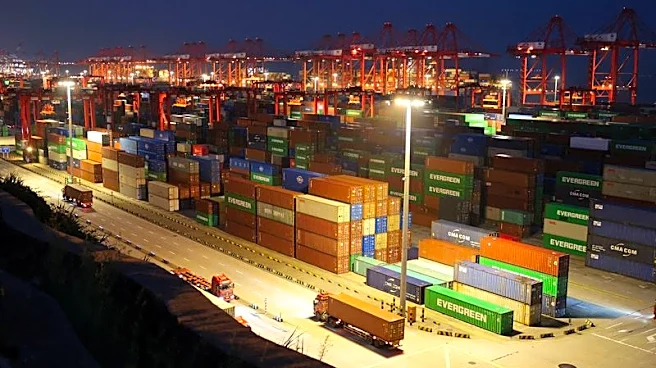
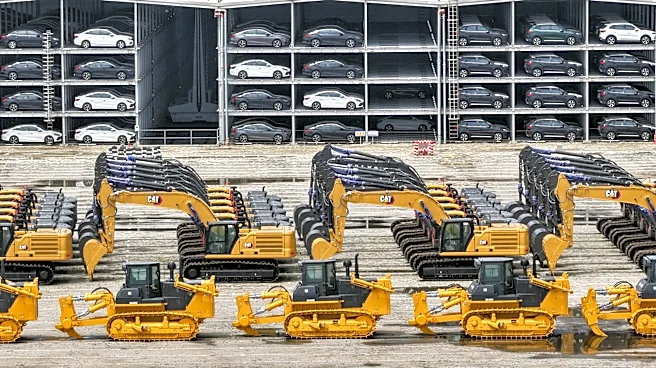
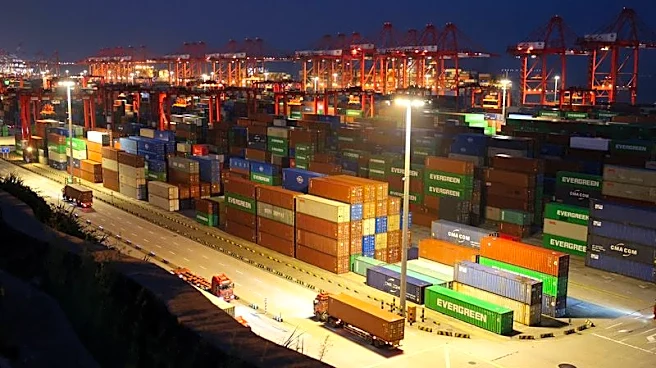
spending and investment, despite a surge in exports driven by high-tech products like electric vehicles and computer chips. The Chinese government has been focusing on high-tech manufacturing and aims to build a robust domestic market to stabilize employment. However, the imbalance between strong supply and weak domestic demand remains a challenge. The country's record $1.2 trillion global trade surplus last year has drawn criticism from international policymakers, who argue that heavy state subsidies contribute to an oversupply of manufactured goods. The International Monetary Fund has adjusted its forecast for China's annual growth to 4.6%, with expectations of further slowing in 2027.
Why It's Important?
The slowdown in China's economic growth has significant implications for global supply chains, particularly in high-tech and manufacturing sectors. As China is a major player in global trade, any disruption or slowdown in its economy can have ripple effects worldwide. The reliance on Chinese exports for high-tech products underscores the vulnerability of global supply chains to shifts in China's economic policies and performance. Additionally, the imbalance between supply and demand within China could lead to increased volatility in global markets, affecting industries reliant on Chinese goods. The situation also highlights the strategic importance of diversifying supply chains to mitigate risks associated with economic slowdowns in major economies like China.
What's Next?
China's focus on high-tech manufacturing and efforts to boost domestic demand will be critical in determining the future trajectory of its economy. The government's ability to stabilize employment and encourage consumer spending will play a key role in addressing the current economic imbalance. Internationally, countries may seek to diversify their supply chains to reduce dependency on Chinese exports, potentially leading to shifts in global trade dynamics. Policymakers worldwide will be closely monitoring China's economic policies and their impact on global markets, particularly in sectors heavily reliant on Chinese goods.