


What's Happening?
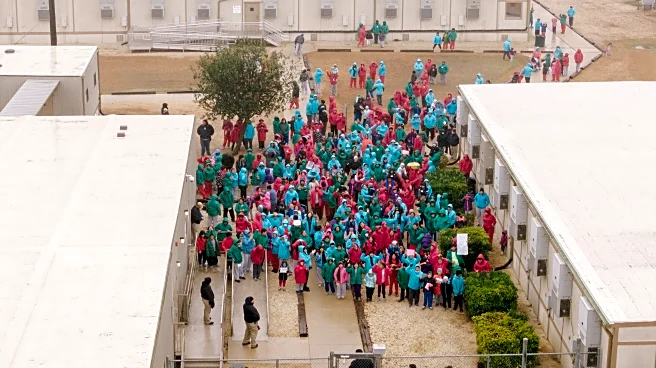
Nearly 600 immigrant children have been held at a family detention center in Dilley, Texas, under concerning conditions, according to recent court documents. The children reportedly faced inadequate food, medical care, and mental health services, with
some being detained beyond the court-mandated limits. The facility, which has seen virus outbreaks and lockdowns, has been criticized for its handling of detainees, including a case where a 13-year-old girl attempted suicide after being denied antidepressants and the chance to reunite with her mother. The Trump administration's efforts to end the Flores settlement, which established a 20-day custody limit, have been met with legal challenges. Despite a decrease in the number of children detained, the conditions remain troubling, as highlighted by legal advocates and attorneys.
Why It's Important?
The situation at the Dilley detention facility underscores ongoing challenges in the U.S. immigration system, particularly concerning the treatment of children. The reported conditions raise significant human rights concerns and highlight the tension between immigration enforcement and child welfare. The Trump administration's stance on the Flores settlement reflects broader policy debates on immigration and detention practices. The prolonged detention of children could have lasting psychological impacts and raises questions about the adequacy of current immigration policies and their implementation. The issue also places pressure on the U.S. government to balance enforcement with humane treatment, potentially influencing future policy decisions and legal standards.
What's Next?
A hearing is scheduled later this month with Chief U.S. District Judge Dolly Gee of the Central District of California to address the ongoing legal challenges related to the Flores settlement. The outcome could impact future detention practices and policies. Legal advocates are likely to continue monitoring conditions and pushing for reforms. The Department of Homeland Security may face increased scrutiny and pressure to improve conditions and comply with legal standards. The broader immigration debate in the U.S. may also be influenced by the findings and decisions related to this case.