


What's Happening?
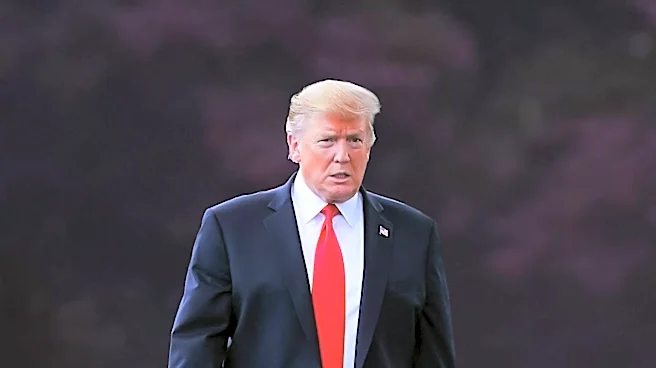
President Trump has issued an executive order to rename Lake Ontario as 'Lake America,' a move reportedly stemming from a tense trade dispute with Canada. This order mandates federal agencies to use the new name on official documents, maps, and contracts.
However, it does not immediately compel New York state agencies, counties, cities, or towns to update their signage, websites, or marketing materials. Rep. Joe Morelle, a Democrat representing parts of Ontario County in Congress, is actively working with others to prevent this name change. Historically, Lake Ontario's name is derived from an Indigenous word meaning 'great lake' or 'lake of shining waters,' and it has retained this name despite past conflicts, such as the War of 1812. Preston Pierce, Ontario County historian, notes that there was no discussion of changing the name even after the War of 1812, emphasizing its historical and descriptive significance.
Why It's Important?
This proposed renaming carries significant implications beyond a simple change of nomenclature. For New York State, particularly Ontario County and its surrounding areas, the name 'Lake Ontario' is deeply embedded in local history, culture, and identity. The county itself was named after the lake, and its historical roots trace back to Indigenous communities like the Seneca Iroquois. A forced name change could disrupt established regional branding, tourism, and historical narratives. Economically, businesses and tourism reliant on the 'Lake Ontario' identity might face confusion and potential costs associated with rebranding. Politically, the move highlights the executive branch's power to influence geographic naming conventions and could set a precedent for similar actions, potentially escalating diplomatic tensions with Canada, which shares the lake and has a province and major city named Ontario. The opposition from Rep. Morelle and others underscores a broader concern about preserving historical names and local autonomy against federal directives.
What's Next?
Rep. Joe Morelle and other opponents are working to stop the name change, though the specific actions they will take are not detailed in the source. The executive order currently only applies to federal agencies, meaning state and local entities are not immediately required to adopt the new name. This distinction suggests a potential legal or legislative battle over the extent of federal authority in renaming geographic features that cross state or international borders. The debate is likely to continue, with historical preservationists, local governments, and potentially Canadian officials weighing in. The long-term impact on U.S.-Canada relations, particularly regarding trade and shared natural resources, will also be a key area to watch as this issue unfolds. The possibility of similar renaming efforts for other geographic features, as suggested by President Trump's past actions, could also become a point of contention.
Beyond the Headlines
The controversy surrounding the renaming of Lake Ontario delves into deeper questions of national identity, historical preservation, and the symbolic power of names. The lake's name, derived from an Indigenous word, represents a connection to the land's original inhabitants and a continuity of history that spans centuries. Changing it for reasons related to a trade dispute could be seen as an erasure of this heritage and a disregard for the cultural significance embedded in place names. This action also raises ethical considerations about the appropriate use of executive power, particularly when it impacts shared international resources and established cultural identities. The debate reflects a broader tension between nationalistic impulses and the respect for historical and cultural legacies, potentially influencing how future administrations approach similar issues of geographic nomenclature and international relations.