



What's Happening?
Oil prices have surged following U.S.-Israeli military strikes on Iran, which have raised concerns about the security of the Strait of Hormuz, a critical chokepoint for global oil shipments. Brent crude prices jumped by 13% to $82 per barrel, the highest
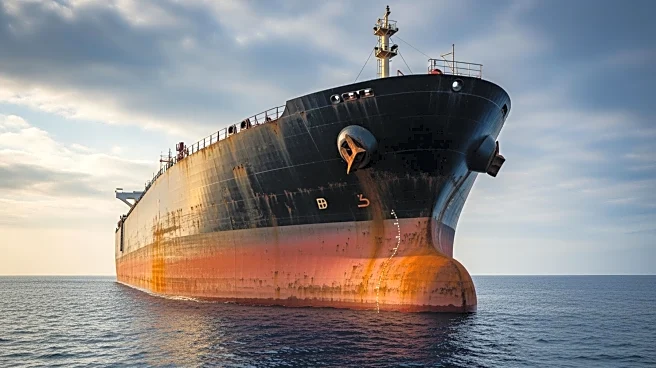
in 14 months, as the strait's effective closure threatens to disrupt the flow of 15 million barrels of oil per day. The International Maritime Organization has urged ships to avoid the region, and major shipping companies like Maersk have halted passage through the strait due to safety concerns.
Why It's Important?
The closure of the Strait of Hormuz, through which a significant portion of the world's oil supply passes, poses a major threat to global energy markets. The resulting spike in oil prices could lead to increased costs for consumers and businesses worldwide, potentially slowing economic growth. The situation highlights the vulnerability of global supply chains to geopolitical conflicts and underscores the importance of securing critical trade routes. The conflict also raises questions about the stability of oil-producing regions and the potential for further escalation.
What's Next?
The international community will be closely monitoring the situation for signs of de-escalation or further conflict. If the strait remains closed, oil prices could continue to rise, prompting calls for increased production from other oil-producing nations. Diplomatic efforts may intensify to resolve the conflict and ensure the safe passage of oil tankers. The situation could also lead to discussions on diversifying energy sources and reducing dependency on oil from volatile regions.