


What's Happening?
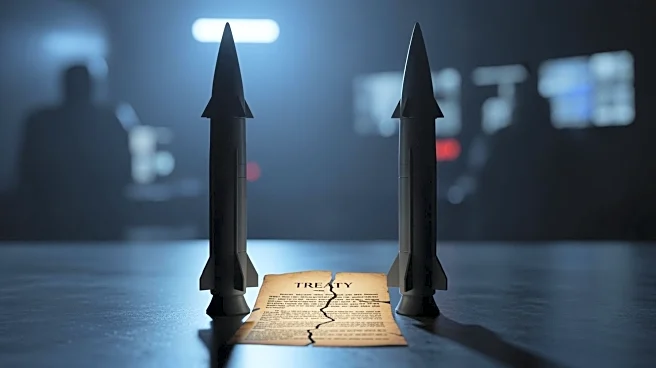
As the New START Treaty between the U.S. and Russia is set to expire, China has stated it is 'not fair' to demand its participation in nuclear arms reduction talks. The treaty, signed in 2010, limits the nuclear arsenals of the U.S. and Russia, but its expiration
will leave no constraints on the world's largest nuclear stockpiles. China, which has been rapidly expanding its nuclear capabilities, argues that its arsenal is significantly smaller than those of the U.S. and Russia, making it unreasonable to include it in disarmament negotiations. The expiration of the treaty occurs amid rising nuclear tensions, with China's expansion, North Korea's advancing program, and U.S. concerns over Iran's nuclear ambitions.
Why It's Important?
The expiration of the New START Treaty marks a significant shift in global nuclear arms control, potentially leading to an arms race. Without the treaty, there are no formal limits on the nuclear capabilities of the U.S. and Russia, which together hold the majority of the world's nuclear weapons. China's stance complicates efforts to establish a new framework for arms control, as its growing arsenal and strategic interests in regions like Taiwan influence global security dynamics. The situation underscores the challenges of multilateral disarmament in a multipolar world, where emerging powers like China seek to assert their influence.
What's Next?
The expiration of the New START Treaty may prompt renewed diplomatic efforts to establish a new arms control agreement. However, the inclusion of China in such talks remains contentious. The U.S. and Russia may explore bilateral or trilateral negotiations, but achieving consensus will be challenging given the geopolitical tensions and differing national interests. The international community will likely monitor developments closely, as the absence of a treaty increases the risk of nuclear proliferation and instability. The situation may also influence defense policies and military strategies, as countries reassess their security needs in a changing global landscape.