
What's Happening?
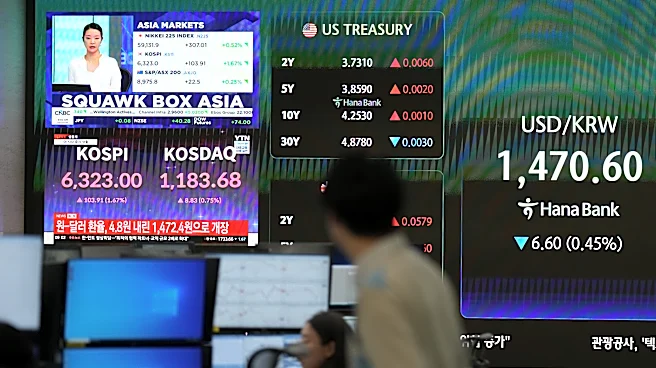
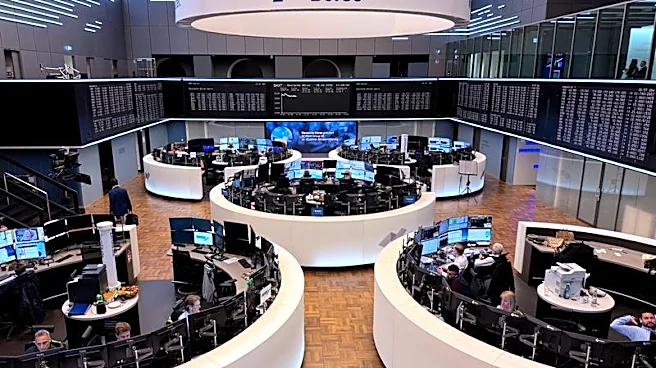
European stock markets are expected to open negatively due to fading optimism over a ceasefire between the U.S. and Iran. Futures data indicate a decline in major European indices, with the Pan-European
Stoxx 50, FTSE 100, and CAC 40 all showing downward trends. The uncertainty stems from U.S. President Trump's comments on not rushing a long-term deal with Iran and the lack of a clear timetable for ending the conflict. Additionally, U.S. forces have reportedly boarded another tanker suspected of carrying Iranian oil, further complicating the situation. Oil prices have edged higher, reflecting the ongoing geopolitical tensions. European investors are also focusing on upcoming corporate earnings reports and economic data releases, which could influence market movements.
Why It's Important?
The anticipated negative opening of European stock markets highlights the impact of geopolitical tensions on global financial markets. The uncertainty surrounding U.S.-Iran relations affects investor sentiment, leading to cautious trading and potential volatility. This situation underscores the interconnectedness of global markets, where developments in one region can have ripple effects worldwide. The ongoing conflict and its implications for oil prices also play a crucial role in shaping market dynamics, influencing sectors such as energy and transportation. Investors and businesses must navigate these uncertainties to make informed decisions.
What's Next?
Investors will continue to monitor geopolitical developments, particularly any progress in U.S.-Iran negotiations, which could influence market sentiment. The release of corporate earnings and economic data in Europe will also be pivotal in determining market trends. Any significant changes in the geopolitical landscape or economic indicators could lead to shifts in investor strategies and market movements. Stakeholders will need to remain vigilant and adaptable to navigate the evolving situation.