
What's Happening?
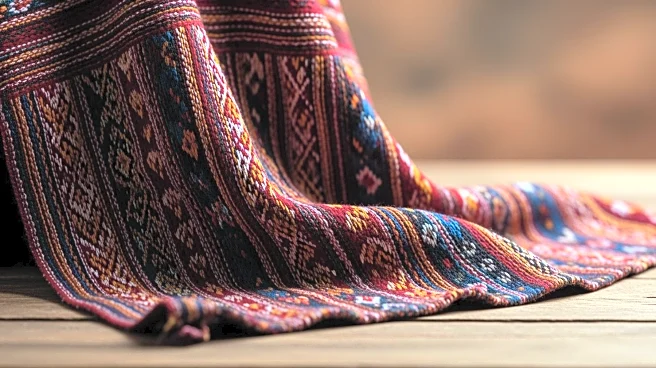
In Bolivia, Indigenous women, known as 'cholitas', are embracing the traditional 'pollera' skirt as a symbol of cultural pride and identity. The pollera, a voluminous skirt with layered petticoats, was
originally imposed by Spanish colonizers but has since been reclaimed and restyled with local fabrics. These women, including mountain climbers, miners, and athletes, wear the pollera in various professional and physical activities, asserting that it represents strength and a connection to their roots. However, the recent political shift with the election of conservative President Rodrigo Paz has raised concerns among these women. The new government, which lacks Indigenous representation, has made changes such as removing Indigenous symbols from official emblems, causing uncertainty about the future of Indigenous rights and representation.
Why It's Important?
The pollera is more than just traditional attire; it is a powerful symbol of Indigenous identity and resilience in Bolivia. The current political climate under President Paz, who succeeded a long era of Indigenous-focused governance, poses potential challenges to the progress made in Indigenous rights. The removal of Indigenous symbols and the absence of Indigenous members in the government could signal a rollback of the advancements achieved under former President Evo Morales. This situation highlights the ongoing struggle for cultural recognition and political representation faced by Indigenous communities in Bolivia. The outcome of this political shift could have significant implications for the social and cultural landscape of the country, affecting the rights and visibility of Indigenous populations.
What's Next?
Indigenous women in Bolivia, like Ana Lia González Maguiña, remain hopeful and determined to advocate for their rights under the new government. They plan to engage with the administration to ensure that their voices are heard and their cultural symbols are respected. The political landscape in Bolivia is likely to see increased activism from Indigenous groups as they seek to protect their hard-won rights and maintain their cultural heritage. The government's response to these demands will be crucial in determining the future of Indigenous representation and rights in Bolivia.
Beyond the Headlines
The situation in Bolivia reflects broader global themes of cultural preservation and the challenges faced by Indigenous communities in asserting their identity within modern political frameworks. The pollera, as a cultural artifact, serves as a reminder of the complex history of colonization and the ongoing efforts to reclaim and celebrate Indigenous heritage. The current political dynamics in Bolivia could influence similar movements in other countries with significant Indigenous populations, highlighting the importance of cultural symbols in the fight for equality and representation.