





What's Happening?
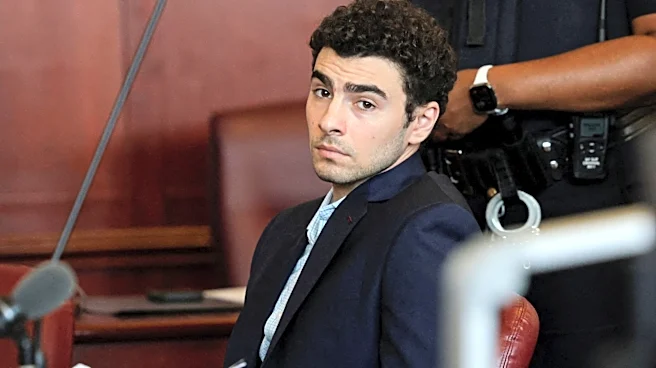
An individual accused of a 2019 murder, Abdulloi Toshpulodzoda, has left the United States on a one-way international flight to Tajikistan via Istanbul. This occurred while he was on a weekend pass from the Northern Virginia Mental Health Institute, where
he had been committed in 2022 after being found not guilty by reason of insanity. Court documents from August 5 reveal that Virginia law permits mental health facilities to grant committed individuals, including those accused of serious crimes, unescorted day or weekend passes. Despite a judge reaffirming in June that Toshpulodzoda should not be released without court order, he was allowed to travel to Washington, D.C., in 2024 to obtain a passport, a move supported by the Commonwealth's Attorney. On July 6, he boarded the flight from Dulles Airport.
Why It's Important?
This incident raises significant concerns regarding public safety and the oversight mechanisms within Virginia's mental health and legal systems. The ability of an individual accused of murder, and committed to a mental health facility, to obtain a passport and leave the country unescorted highlights potential loopholes in current state laws and facility protocols. It underscores a critical disconnect between judicial orders, which mandated continued confinement, and the operational decisions made by the mental health institute. The event also brings into question the adequacy of communication and coordination between mental health facilities, law enforcement, and judicial authorities, particularly when dealing with individuals deemed a risk to public safety. This situation could prompt a review of Virginia's laws concerning the privileges granted to committed individuals and the procedures for international travel.
What's Next?
The Commonwealth's Attorney's Office filed a motion on August 5, a month after Toshpulodzoda's departure, requesting a warrant enforceable beyond Virginia's borders. This indicates that if he re-enters the U.S., he will be arrested and brought back to Virginia. The Department of Behavioral Health and Developmental Services (DBHDS) has cited privacy laws, preventing them from discussing specific individuals, but stated that clinical teams can request graduated privileges based on assessments, which must be approved by an expert panel. This incident is likely to trigger a comprehensive review of the policies governing weekend passes and international travel for individuals committed to mental health facilities in Virginia. There may also be calls for increased transparency and accountability from both the mental health institute and relevant state agencies.
Beyond the Headlines
The case of Abdulloi Toshpulodzoda exposes a complex interplay of legal interpretations, mental health treatment protocols, and public safety concerns. The 'not guilty by reason of insanity' verdict, while a legal finding, places a unique responsibility on the state to manage and treat individuals who have committed serious offenses but are deemed not criminally responsible due to mental illness. The granting of unescorted passes, especially for international travel, raises ethical questions about the balance between patient autonomy, therapeutic progress, and the paramount need for public protection. This incident could lead to broader discussions about reforming mental health commitment laws, enhancing inter-agency communication, and ensuring that treatment plans for individuals with a history of violence are rigorously vetted and monitored to prevent similar occurrences in the future.