
What's Happening?
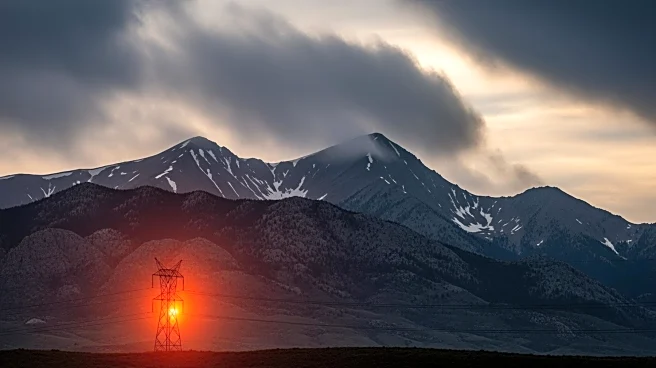
Xcel Energy is preparing to implement temporary power outages in Colorado's Front Range due to high winds and critical fire danger. The company announced that power could be cut to approximately 50,000
customers in Boulder, Clear Creek, Jefferson, Larimer, and Weld counties starting at 10 a.m. on Wednesday. This decision is part of a Public Safety Power Shutoff strategy aimed at preventing fires that could be sparked by downed power lines. The high winds, expected to gust up to 85 miles per hour, are part of a weather pattern influenced by La Niña, bringing moisture from the Pacific Northwest. However, the combination of long-standing drought, dry fuels, and unseasonably warm temperatures has heightened the fire risk. Local schools and businesses are preparing for potential outages, with some adjusting schedules or closing. The University of Colorado Boulder will operate under an administrative closure, maintaining only essential services.
Why It's Important?
The planned power outages by Xcel Energy highlight the increasing challenges utilities face in managing fire risks exacerbated by climate conditions. The decision underscores the delicate balance between maintaining power supply and ensuring public safety in high-risk areas. For residents and businesses, these outages could disrupt daily activities, emphasizing the need for preparedness in the face of natural hazards. The situation also reflects broader environmental concerns, as changing weather patterns and prolonged drought conditions continue to pose significant risks to infrastructure and communities. The proactive measures by Xcel Energy aim to mitigate potential disasters, but they also bring attention to the ongoing need for infrastructure resilience and adaptation strategies in response to climate change.
What's Next?
Xcel Energy plans to restore power once the high winds and fire risks subside, expected around 6 p.m. on Wednesday. The company will monitor conditions closely and adjust plans as necessary. Residents are advised to prepare for outages by charging electronic devices, securing backup power sources, and ensuring access to emergency information. The situation may prompt further discussions among policymakers and utility companies about long-term strategies to address fire risks and improve grid resilience. Community responses and feedback could influence future policies and investments in infrastructure to better handle similar events.