



What's Happening?
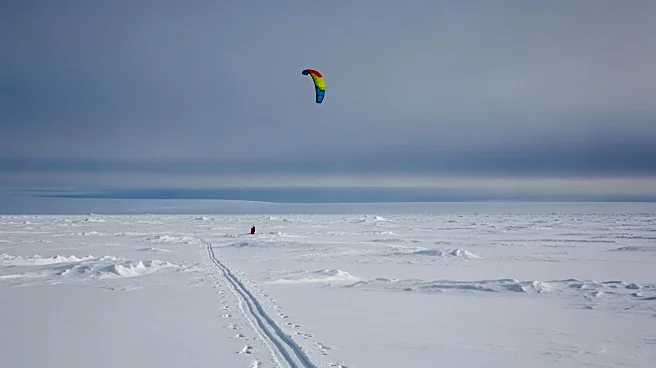
Explorer Matthieu Tordeur and glaciologist Heïdi Sevestre are undertaking a 4,000-kilometer kite-skiing expedition across Antarctica. Equipped with ground-penetrating radar, they aim to collect data on the ice sheet's past and future in the context of
climate change. The expedition marks the first kite-ski venture for polar science, allowing the team to traverse vast distances and gather detailed subsurface data. Their findings could provide insights into whether increased snowfall in East Antarctica offsets coastal melting, contributing to more accurate climate models.
Why It's Important?
This expedition is significant for its potential to enhance understanding of Antarctica's ice dynamics amid global warming. The data collected could inform predictions about sea-level rise and the stability of the ice sheet, which holds implications for global climate policy and coastal communities. The innovative use of kite-skiing for scientific research demonstrates a novel approach to data collection in challenging environments, potentially setting a precedent for future expeditions. The findings may also influence international climate agreements and conservation efforts aimed at mitigating the impacts of climate change.
What's Next?
The expedition is expected to continue for three months, with the team aiming to reach Hercules Inlet before the Antarctic summer ends. Their journey will contribute to ongoing research efforts by institutions like the British Antarctic Survey, which seeks to understand the historical behavior of the ice sheet. The data could play a crucial role in refining climate models and informing global strategies to address climate change. As the expedition progresses, the scientific community will closely monitor the results, which could have far-reaching implications for environmental policy and research.