

What's Happening?
A fire broke out at a Housing & Development Board (HDB) flat in Lorong Lew Lian, Upper Serangoon, Singapore, resulting in one fatality and three injuries. The Singapore Civil Defence Force (SCDF) was alerted to the incident at Block 8 Lorong Lew Lian around
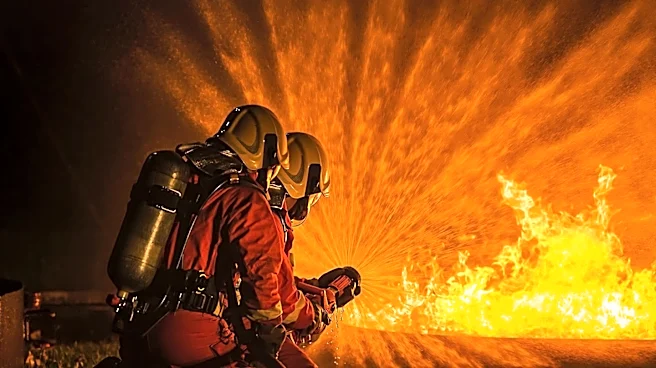
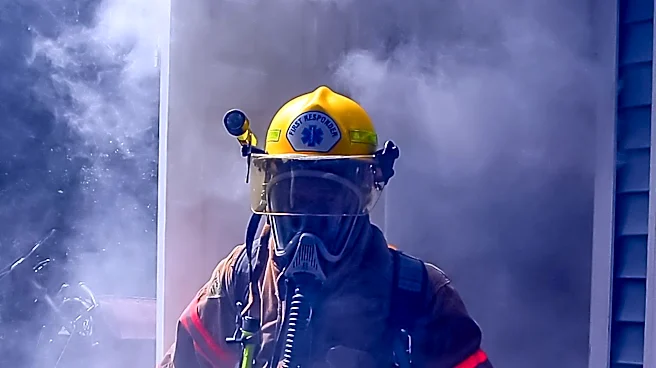
2:45 PM. Upon arrival, SCDF officers observed black smoke emanating from a third-floor unit. Firefighters extinguished the blaze, which involved the contents of the living room, using a water jet. During the firefighting operation, an unconscious 68-year-old man was discovered in the living room. He was transported to Tan Tock Seng Hospital, where he later died. Three other individuals, women aged between 51 and 94, were also taken to Tan Tock Seng Hospital and Singapore General Hospital for smoke inhalation and breathlessness. Approximately 30 residents from the affected block were evacuated as a precautionary measure by the police and SCDF. Preliminary investigations by the police do not suspect foul play, and investigations into the cause of the fire are ongoing. This incident marks the fifth death from a residential fire in Singapore since July 28.
Why It's Important?
This tragic incident underscores the critical importance of fire safety and emergency preparedness in high-density urban living environments like Singapore's HDB flats. The evacuation of 30 residents highlights the potential for widespread impact even from a single unit fire, emphasizing the need for effective building safety protocols and community awareness. The death of the occupant, despite the rapid response of emergency services, points to the severe and immediate dangers posed by residential fires, particularly concerning smoke inhalation and the speed at which fires can spread. The ongoing police investigation into the cause of the fire is crucial for identifying any systemic issues or individual factors that contributed to the tragedy, which could inform future fire prevention strategies and public safety campaigns. The fact that this is the fifth residential fire death since July 28 suggests a concerning trend that may warrant a review of current fire safety measures and public education efforts to prevent further loss of life.
What's Next?
Police investigations into the cause of the fire are ongoing. The findings from this investigation will be critical in determining if any specific factors contributed to the fire and the fatality. Depending on the outcome, there could be recommendations for enhanced fire safety measures, public awareness campaigns, or changes in building regulations, particularly concerning clutter in common areas or within units, as mentioned by neighbors. The Marine Parade-Braddell Heights GRC MP Seah Kian Peng has indicated that work is being done to assist residents affected by the fire, suggesting ongoing support for those displaced or impacted. The SCDF and local authorities will likely review their response protocols and community engagement strategies in light of this incident and the recent trend of residential fire deaths. This could lead to increased inspections, educational outreach on fire prevention, and potentially stricter enforcement of fire safety guidelines within HDB estates.
Beyond the Headlines
Beyond the immediate tragedy, this incident brings to light broader societal issues related to urban living and community responsibility. The neighbor's observation about the victim's unit having 'plenty of clutter' and their advice to discard belongings, though well-intentioned, points to potential challenges in balancing individual autonomy with collective safety in communal living spaces. Hoarding, or the accumulation of excessive items, can significantly increase fire risk and impede evacuation efforts, posing a danger not only to the individual but also to neighbors. This raises questions about how communities and authorities can address such issues sensitively and effectively, perhaps through support services rather than punitive measures. The incident also highlights the psychological impact of such events on neighbors, particularly those with young children, underscoring the need for community support and mental health resources in the aftermath of traumatic events. The repeated occurrence of residential fire deaths in a short period may also prompt a deeper examination of the aging population's vulnerability to such incidents and the adequacy of current support systems for them.