



What's Happening?
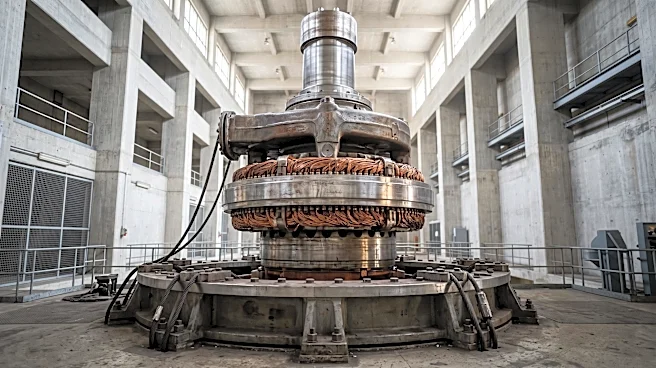
The National Hydropower Association (NHA) is highlighting the critical need for hydropower operators to strategically maintain, modernize, or replace their assets to ensure long-term reliability and value. Many hydropower facilities, some over a century
old, require careful assessment to determine the most effective path forward. This involves evaluating equipment condition, operational risk, cybersecurity needs, workforce readiness, and business objectives. The NHA emphasizes that while some assets can be maintained through disciplined strategies, others necessitate targeted modernization, such as digital governor upgrades or excitation system enhancements. In cases where legacy systems are no longer supportable or new functionality is required, comprehensive modernization or replacement initiatives are essential to create a foundation for future growth and innovation.
Why It's Important?
The modernization of hydropower assets is crucial for maintaining a stable and reliable renewable energy supply in the U.S. Hydropower is a significant component of the nation's energy infrastructure, and the aging nature of many facilities poses risks to energy security and operational efficiency. By advocating for strategic upgrades, the NHA aims to prevent unexpected failures, reduce maintenance costs, and improve overall performance. Modernization also addresses evolving challenges like cybersecurity threats and the need for advanced diagnostics. Furthermore, it supports workforce transitions by integrating new digital tools that facilitate operator training and knowledge transfer, ensuring that critical expertise is retained as experienced personnel retire. This proactive approach is vital for the continued contribution of hydropower to the U.S. energy mix and its role in achieving renewable energy goals.
What's Next?
The NHA encourages hydropower operators to develop long-term asset roadmaps that identify which assets require maintenance, phased modernization, or full replacement, along with budget requirements and implementation priorities. Regular assessments are recommended to adapt to technological advancements, evolving cybersecurity threats, and changing operational expectations. Programs like Emerson’s Ovation™ Evergreen are highlighted as solutions to keep systems current through planned hardware and software updates, reducing the need for future large-scale replacements. The industry is expected to continue moving towards standardized automation platforms to improve visibility and operational consistency across diverse hydro assets, ensuring they remain valuable generating assets for decades to come.
Beyond the Headlines
The push for hydropower modernization extends beyond mere operational efficiency; it touches upon broader themes of infrastructure resilience and environmental sustainability. Upgrading these facilities can enhance their ability to adapt to changing climate conditions, such as fluctuating water levels, and improve their environmental performance through better water management and fish passage solutions. The integration of advanced technologies, including AI, also signifies a shift towards a more intelligent and interconnected energy grid, contributing to overall grid stability and the efficient integration of other renewable sources. This strategic investment in hydropower infrastructure is a testament to its enduring value as a clean energy source and its potential to play an even greater role in a sustainable future.