

What's Happening?
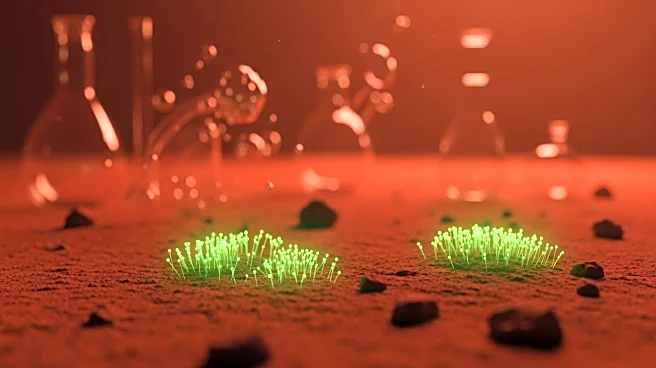
Researchers have identified Earth’s resilient microbes as potential allies in constructing human habitats on Mars. These microorganisms could transform Martian soil into a concrete-like material, essential for building shelters, while also producing oxygen
necessary for sustaining life. The study, published in Frontiers in Microbiology, highlights the use of two bacteria, Sporosarcina pasteurii and Chroococcidiopsis. Sporosarcina pasteurii is known for producing calcium carbonate, which can solidify loose soil, while Chroococcidiopsis, a cyanobacterium, thrives in extreme conditions and can generate oxygen. This innovative approach aims to utilize Martian resources, reducing the need for costly material transport from Earth. The process involves biocementation, where microorganisms bind local materials into a durable substance, potentially revolutionizing habitat construction on Mars.
Why It's Important?
The discovery of using microbes for construction and life support on Mars is significant as it addresses the challenges of establishing a sustainable human presence on the planet. Mars, with its harsh environment, requires innovative solutions for building habitats that can withstand cosmic radiation and provide necessary life support. By leveraging local resources and microbial processes, the cost and logistical challenges of transporting materials from Earth could be significantly reduced. This development is crucial for future Mars missions by NASA and other space agencies, as it could facilitate long-term human settlement and exploration. The ability to produce oxygen and potentially grow food on Mars using these microbes could lead to self-sustaining colonies, a critical step for human survival beyond Earth.
What's Next?
As the research progresses, further testing and refinement of the biocementation process and microbial applications are expected. Scientists will likely focus on optimizing the conditions under which these microbes can thrive and effectively transform Martian soil. The integration of 3D printing technology with microbial processes to construct habitats will also be a key area of development. Space agencies, including NASA, may incorporate these findings into their mission planning, potentially leading to experimental trials on Mars. The success of these technologies could pave the way for more ambitious human exploration and settlement plans on the Red Planet.
Beyond the Headlines
The use of microbes for construction and life support on Mars raises interesting ethical and environmental considerations. Introducing Earth-based organisms to another planet could have unforeseen ecological impacts, necessitating careful study and regulation. Additionally, the development of self-sustaining colonies on Mars could influence future space policy and international cooperation in space exploration. The potential for in-situ resource utilization also highlights the importance of interdisciplinary research, combining microbiology, engineering, and space science to address the complex challenges of extraterrestrial habitation.