
What's Happening?
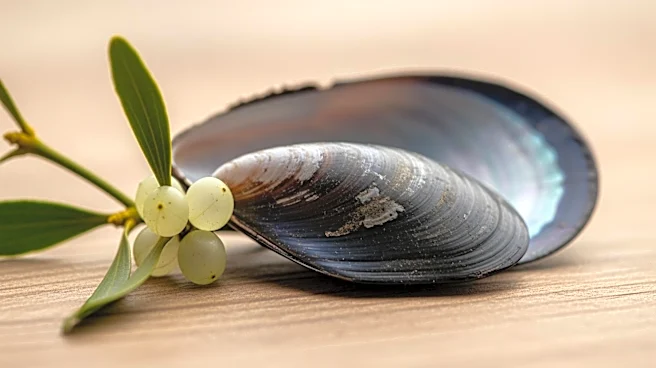
A research team from McGill University has developed a new method for manufacturing complex materials by drawing inspiration from the natural adhesive properties of mussels and the cellulose fiber networks
of mistletoe berries. The team combined laboratory-produced mussel protein with modified cellulose nanocrystals from wood pulp to create microdroplets. These droplets, when freeze-dried, form aligned porous scaffolds that mimic biological structures. This innovative approach aims to provide a sustainable alternative to conventional plastics and glues, which are known to harm the environment. The materials developed are non-toxic to human cells, suggesting potential applications in biomedical fields, particularly tissue engineering.
Why It's Important?
The development of these materials is significant as it offers a sustainable alternative to traditional plastics and glues, which are environmentally damaging. By utilizing natural processes and materials, the research could lead to more eco-friendly manufacturing methods. This innovation not only addresses environmental concerns but also opens up possibilities for advancements in biomedical applications, potentially revolutionizing how materials are used in medical settings. The ability to repeatedly reuse the materials further enhances their sustainability, making this a promising development in the field of material science.