



What's Happening?
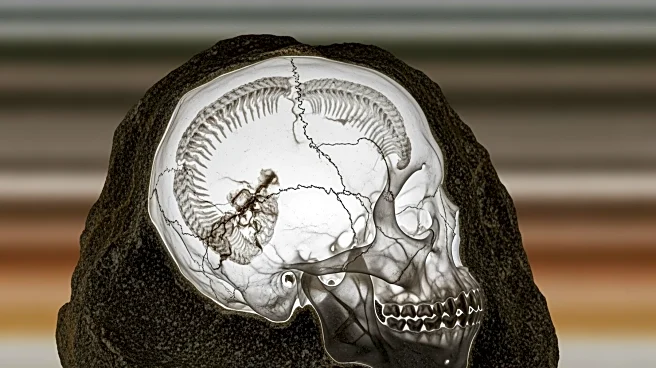
A recent study utilizing CT scans has provided new insights into the Triassic cynodont species Cistecynodon parvus, a fossil discovered in South Africa in 1952. Researchers have digitally reconstructed the fossil, revealing that it belongs to a more primitive
group of cynodonts than previously thought. The study identified unique anatomical features, such as an enlarged vestibule in the inner ear, suggesting a subterranean lifestyle. These findings support the classification of Cistecynodon parvus as a distinct genus and species, contributing to the understanding of cynodont evolution and their role in the origin of mammals.
Why It's Important?
The study of Cistecynodon parvus offers valuable insights into the evolutionary history of cynodonts, a group crucial to understanding the origins of mammals. By clarifying the phylogenetic position of this species, researchers can better comprehend the diversity and adaptation strategies of early cynodonts. This research highlights the potential of modern imaging techniques, like CT scans, to uncover details about ancient species that were previously inaccessible. The findings also underscore the importance of re-evaluating historical fossil specimens with new technologies to enhance our understanding of prehistoric life.
Beyond the Headlines
The discovery of Cistecynodon parvus's subterranean traits suggests that early cynodonts may have occupied diverse ecological niches, contributing to their evolutionary success. This research could prompt further studies into the environmental adaptations of other prehistoric species, offering a broader perspective on how ancient ecosystems functioned. Additionally, the use of CT scanning technology in paleontology may lead to more discoveries, as it allows scientists to explore fossilized remains in unprecedented detail without damaging the specimens.