







What's Happening?
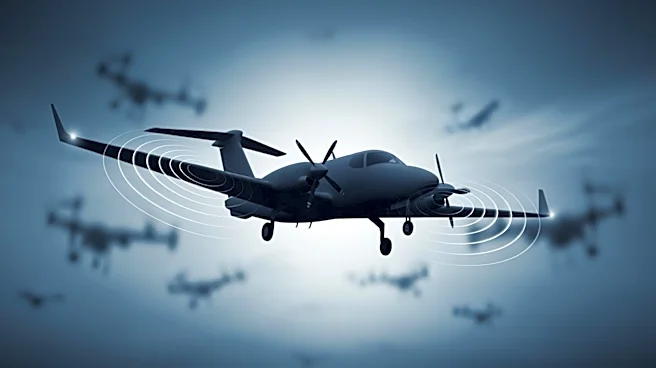
Ukraine has initiated the use of a modified An-28 aircraft as a platform to launch interceptor drones aimed at neutralizing Russian Shahed-type attack drones. This development was highlighted in newly released footage showing the An-28 equipped with multiple
external mounts, allowing it to carry up to six P1-SUN interceptor drones developed by the Ukrainian company SkyFall. These drones are launched from the aircraft to intercept Russian drones before they reach their targets. The An-28 is also fitted with an optical targeting system to detect and engage enemy drones. This approach offers a cost-effective alternative to traditional air-to-air missiles, providing greater flexibility and reduced flight times for intercepting drones. The initiative is part of Ukraine's broader strategy to counter threats from low-cost kamikaze drones, with the An-28's role as a drone-hunting platform first revealed in February.
Why It's Important?
The deployment of the An-28 aircraft as a drone interceptor platform is significant for Ukraine's defense strategy against Russian drone attacks. By utilizing a cost-effective method to counteract the threat posed by Shahed-style drones, Ukraine can conserve resources while maintaining its defensive capabilities. The cost disparity between the drones and traditional missile defense systems, such as the US Patriot missiles, highlights the financial efficiency of this approach. This strategy not only enhances Ukraine's ability to protect its airspace but also demonstrates innovation in military tactics, potentially influencing other nations facing similar threats. The success of this initiative could lead to broader adoption of similar technologies and tactics in drone warfare.
What's Next?
Ukraine is likely to continue refining and expanding its use of modified aircraft and interceptor drones to enhance its defensive capabilities. The ongoing trials of US-made Merops drones alongside Ukrainian systems suggest potential international collaboration in developing and deploying these technologies. As Ukraine scales up its low-cost interceptor drone production, it may seek further partnerships with other countries to bolster its defense infrastructure. Additionally, the effectiveness of these tactics could prompt Russia to adapt its drone strategies, potentially leading to an escalation in drone warfare tactics and countermeasures.
Beyond the Headlines
The use of modified aircraft for drone interception raises questions about the future of aerial combat and the role of unmanned systems in warfare. This development could signal a shift towards more autonomous and cost-effective military solutions, challenging traditional defense paradigms. The ethical implications of using drones in combat, particularly regarding civilian involvement and the potential for collateral damage, may also come under scrutiny. As drone technology continues to evolve, international regulations and agreements may need to be updated to address these new challenges.