






What's Happening?
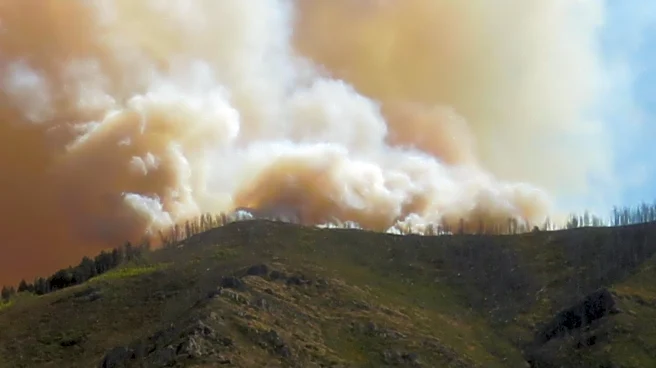
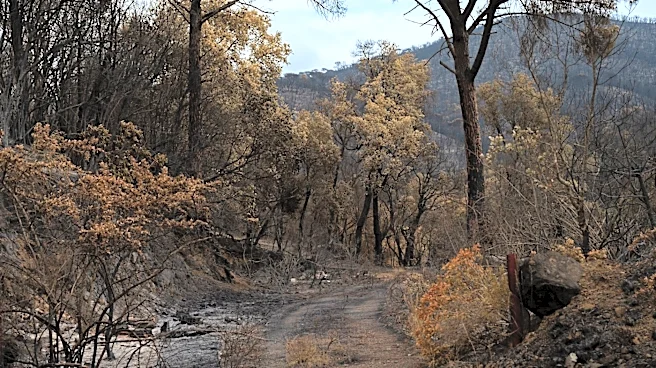
The Grasshopper Fire burning on Mt. Hood National Forest in Oregon has reached 38% containment, covering an estimated 90,130 acres. Firefighters are bracing for near-critical fire weather conditions expected on Monday and Tuesday, characterized by warmer,
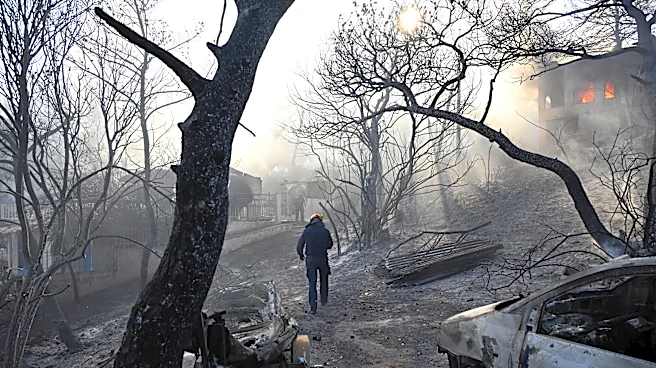
drier air, northwest winds, and decreasing humidity. Despite recent rains and cooler temperatures that helped limit activity on the western and northern edges, the southeastern flank of the fire remains active. Initial damage assessments indicate that six primary residences and 15 outbuildings have been destroyed. Fire managers reported that a recent increase in reported acreage was primarily due to updated mapping data rather than a surge in fire activity. Crews are focusing on strengthening containment lines, particularly on the eastern flank, and conducting hazard tree removal along Highway 35.
Why It's Important?
The Grasshopper Fire's continued activity and the forecast for critical fire weather pose significant risks to communities, infrastructure, and natural resources in Oregon. Wildfires of this scale can lead to extensive property damage, displacement of residents, and long-term ecological impacts, including habitat destruction and soil erosion. The threat to the historic Timberline Lodge and the potential for the fire to spread into more densely populated areas highlight the economic and cultural stakes involved. Furthermore, the fire's smoke impacts air quality across the region, affecting public health. The ongoing efforts to contain the fire and mitigate its effects are crucial for protecting lives, property, and the environment, while also demonstrating the challenges faced by fire management agencies in a changing climate.
What's Next?
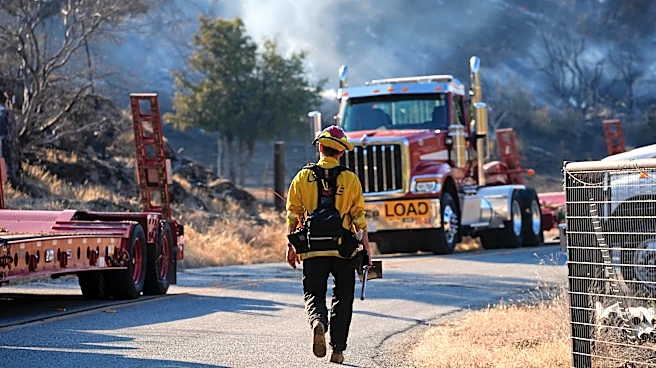
Firefighters will intensify their efforts on the eastern flank of the Grasshopper Fire, working to connect established lines and strengthen the perimeter ahead of the anticipated near-critical fire weather. Hotshot crews, dozers, and wildland firefighters will continue operations south of Elliott Road, while structural resources will focus on protecting properties near Friend Road and in the Shadybrook Road area. Aircraft support will be deployed as conditions allow, prioritizing the eastern flank. Public safety measures, including evacuation notices ranging from Level 1 to Level 3 in Hood River, Wasco, and Clackamas counties, will remain in effect and may be adjusted based on fire behavior. Motorists are advised to exercise caution on Highway 35 due to ongoing hazard tree removal and emergency personnel activity.
Beyond the Headlines
The Grasshopper Fire underscores the increasing frequency and intensity of wildfires in the Western United States, a trend exacerbated by climate change, prolonged droughts, and forest management practices. This event highlights the complex interplay between environmental factors, human activity, and the escalating costs of wildfire suppression. Beyond immediate containment, the long-term implications include ecosystem recovery, potential shifts in local economies reliant on tourism and natural resources, and the psychological toll on affected communities. The fire also brings into focus the need for proactive measures such as improved forest health, community preparedness, and robust emergency response systems to adapt to a future with more frequent and severe fire seasons. The incident serves as a stark reminder of the vulnerability of wildland-urban interfaces.