









What's Happening?
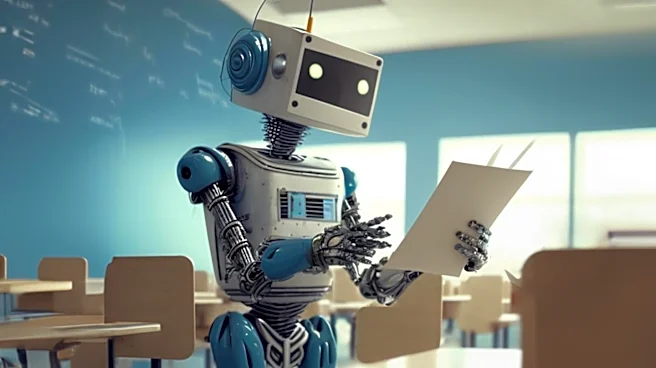
Artificial intelligence is rapidly being integrated into educational settings, yet many schools lack formal guidance on its use. A UNESCO survey indicates that less than 10% of educational institutions have established policies for generative AI, despite
its growing presence. Kirstin Stevens, an education systems designer, highlights the relational aspect of AI, which mirrors human identity and trust-building processes. She notes that AI's influence extends beyond traditional educational tools, affecting behavior and decision-making. Stevens emphasizes the need for a human-centered approach to AI in education, advocating for policies that prioritize ethical standards and child development.
Why It's Important?
The integration of AI in education has significant implications for how children develop and interact with technology. Without proper governance, there are risks related to data privacy and the potential for AI to shape emotional and behavioral patterns in students. Stevens argues that current policy discussions are insufficient, focusing too much on productivity rather than the relational and developmental impacts of AI. The lack of comprehensive frameworks could lead to emotional dependency on AI systems, which are not accounted for in traditional safeguarding models. This situation underscores the need for a broader concept of AI literacy that includes relational literacy and human judgment.
What's Next?
As AI continues to be deployed in educational settings, there is an urgent need for governments and institutions to establish clear policies and ethical safeguards. Stevens is advocating for a redesign of AI's role in education, emphasizing human-first design principles. This includes setting boundaries to prevent emotional dependency and ensuring robust data protection. The development of new learning environments that integrate AI responsibly is crucial. Stevens is already applying these principles, focusing on enabling educators to create adaptive learning experiences. The decisions made now will influence how future generations understand trust and connection.
Beyond the Headlines
The rapid adoption of AI in education reflects broader societal trends towards technology integration. However, it also raises ethical questions about the role of AI in shaping human relationships and identity. Stevens' work highlights the importance of involving children in decisions that affect their development, challenging assumptions about their engagement with AI. The conversation around AI in education is not just about technology but about redefining educational practices to ensure they align with human values and development goals. This shift requires a deeper reflection on the part of institutions and policymakers.