




What's Happening?
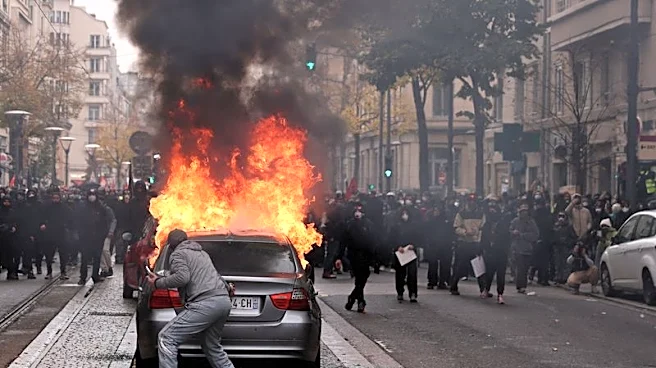
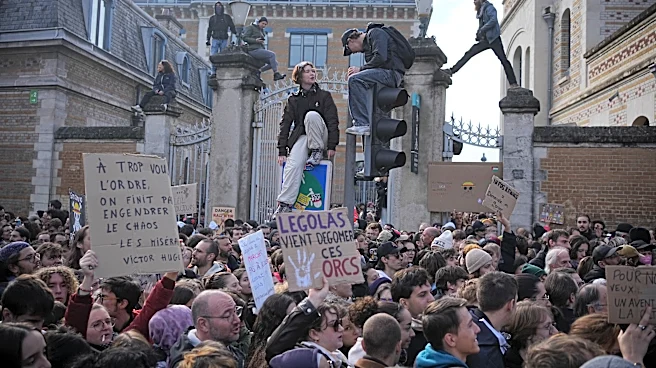
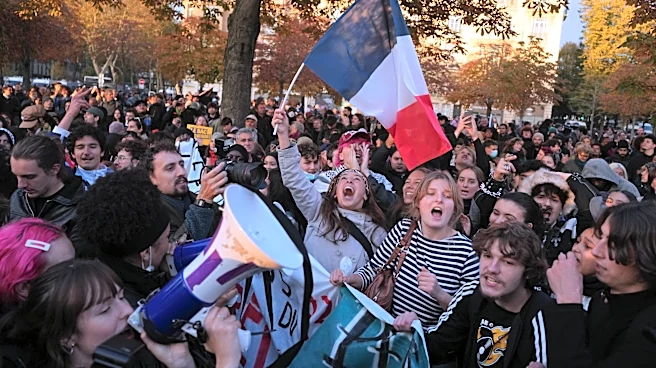
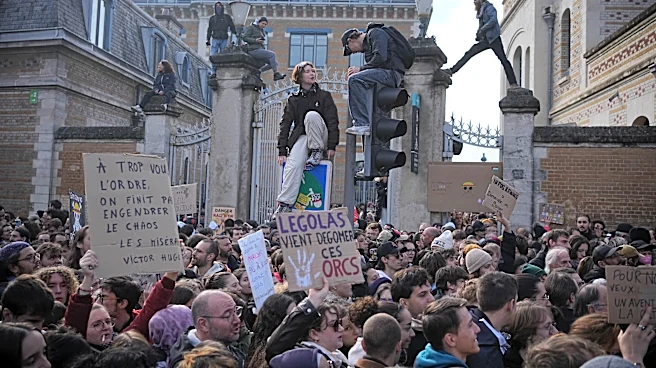
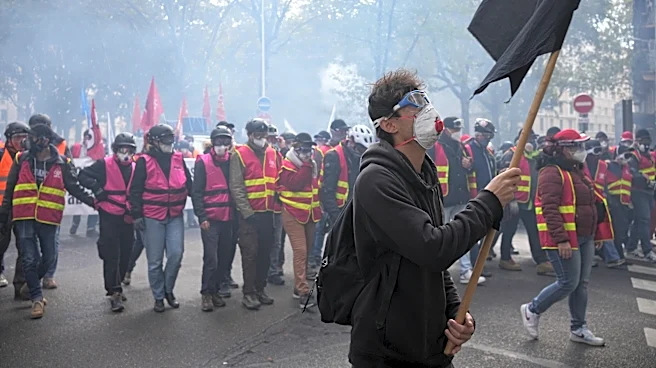
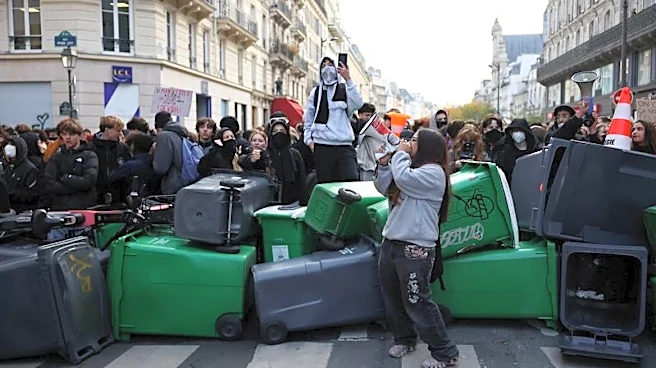
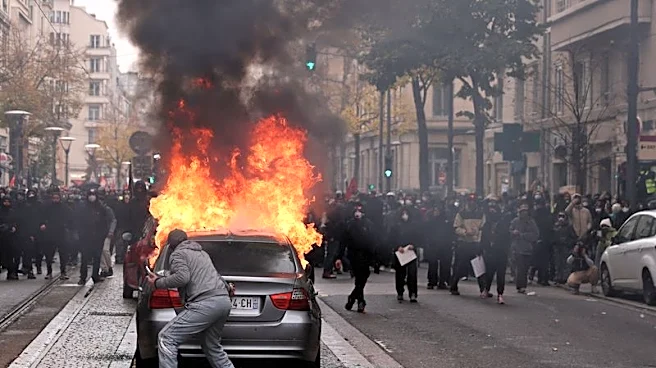
French President Emmanuel Macron convened a defense and security meeting yesterday in anticipation of widespread protests across France. These demonstrations, organized by trade unions and student groups, are a renewed challenge to his government, following
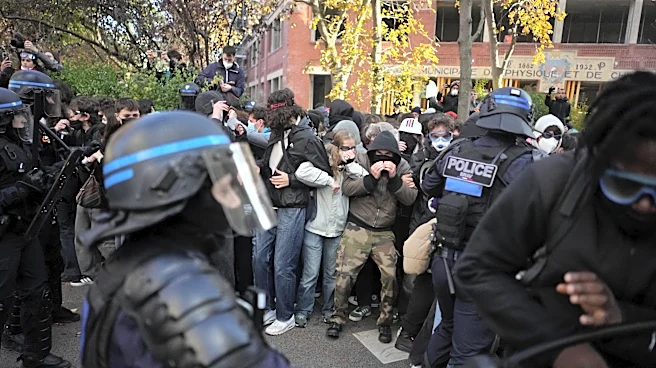
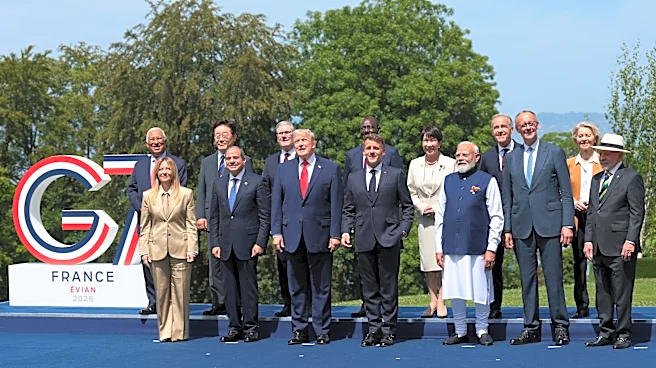
weeks of unrest over living costs, public services, and education. The protests have evolved into a broader challenge to Macron's administration, occurring just five months before a presidential election. Authorities are deploying approximately 70,000 police nationwide, with the domestic intelligence service expecting between 500,000 and 700,000 participants outside Paris. In a related development, France has relocated a G7 foreign ministers' meeting from Marseille to Paris at the last minute, citing logistical and operational reasons due to the compressed timeframe of the G7 and the Paris Peace Forum.
Why It's Important?
The ongoing protests and the government's response highlight significant social and political instability in France, which could have ripple effects across Europe and impact international relations. The relocation of the G7 meeting, a high-profile international event, underscores the severity of the domestic unrest and the government's focus on maintaining order and security. For the U.S., instability in a key European ally like France can affect diplomatic efforts, economic partnerships, and the broader transatlantic alliance. The protests, driven by concerns over living costs and public services, reflect a broader trend of public dissatisfaction with economic conditions and government policies seen in various Western democracies. The situation could also influence the upcoming French presidential election, potentially shifting political dynamics within the European Union.
What's Next?
The protests are expected to continue, with demonstrations planned in 260 towns and cities across France. The government's ability to manage these protests and address the underlying grievances will be crucial in the coming weeks, especially with the presidential election approaching. The relocation of the G7 foreign ministers' meeting to Paris indicates a strategic decision to centralize security and logistical resources, suggesting that the government anticipates continued challenges. The outcome of these protests and the government's handling of them will likely shape public opinion and influence the political landscape leading up to the election. The international community, including the U.S., will be closely observing these developments for their potential impact on European stability and cooperation.
Beyond the Headlines
The protests in France reveal deeper societal divisions and a growing frustration with economic inequality and the perceived erosion of public services. This unrest is not isolated to France but reflects a broader global trend of populism and anti-establishment sentiment. The government's defense of police tactics amidst accusations of violence also raises questions about civil liberties and the state's use of force in managing dissent. The decision to move the G7 meeting, while attributed to logistical reasons, implicitly acknowledges the security challenges posed by the protests, potentially signaling a prioritization of domestic stability over international optics. This situation could serve as a case study for other nations grappling with similar socio-economic challenges and the delicate balance between maintaining order and respecting democratic freedoms.