
What's Happening?
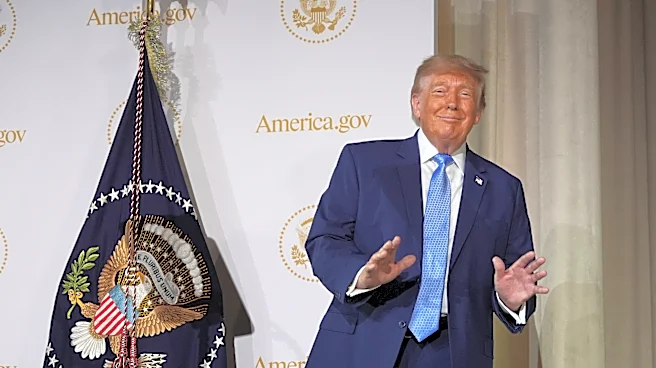
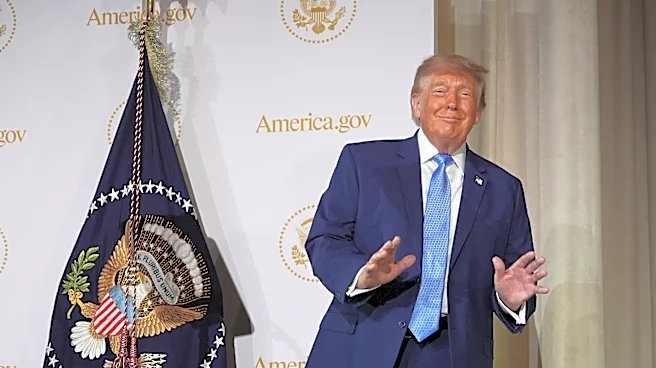
President Trump's administration has launched America.gov, an artificial intelligence-powered chatbot designed to serve as a unified portal for federal government services. Unveiled on Tuesday, the platform
aims to simplify access to government information and services, allowing users to inquire about tasks ranging from booking national park campsites to replacing Social Security cards. Joe Gebbia, the U.S. Chief Design Officer and co-founder of Airbnb, stated that America.gov is trained on official U.S. government sources and is powered by Google's Gemini and Elon Musk's Grok. President Trump signed an executive order during the launch event, directing the General Services Administration, the National Design Studio, and the Office of Management and Budget to establish America.gov as the single point of entry for Americans to access covered services online, and to integrate Login.gov for identity verification. Commerce Secretary Howard Lutnick was among the Cabinet officials in attendance at the launch event.
Why It's Important?
The launch of America.gov represents a significant step in the Trump administration's efforts to integrate artificial intelligence into government operations and streamline public services. By consolidating information from approximately 29,000 government websites into a single, AI-driven platform, the initiative aims to improve efficiency and user experience for citizens interacting with federal agencies. This move could reduce bureaucratic hurdles, enhance accessibility for a wider range of users, and potentially lower operational costs for the government. However, it also raises important questions about data privacy, the accuracy of AI-generated information, and the potential for digital divides. The success of America.gov could set a precedent for future government technology initiatives and influence public perception of AI's role in public administration.
What's Next?
While America.gov has launched with a search and information retrieval function, future plans for 2027 include enabling users to complete processes directly on the platform, such as submitting documents for name changes. The administration will need to address concerns regarding user privacy and the security of personal data, as details on how the AI underpinning the platform was procured and how user privacy will be protected remain largely undisclosed. The integration of Login.gov will continue, aiming to standardize identity verification across government services. The long-term success of America.gov will depend on its ability to overcome technical challenges, ensure data integrity, and gain public trust, especially as it expands its transactional capabilities.
Beyond the Headlines
The introduction of America.gov highlights a broader philosophical shift towards leveraging advanced technology to redefine the relationship between citizens and their government. This initiative could lead to a more personalized and efficient government experience, but it also brings forth ethical considerations regarding algorithmic bias, transparency in AI decision-making, and the potential for increased surveillance. The move to centralize government services through an AI chatbot could also impact the future of government employment, potentially automating tasks traditionally performed by human agents. Furthermore, President Trump's declaration to rename AI as 'Super Intelligence' and use 'SI' in official communications suggests an attempt to reframe public discourse around this technology, emphasizing its transformative potential and perhaps downplaying its current limitations and risks.